With glass as its language, it narrates the poetry of farming.
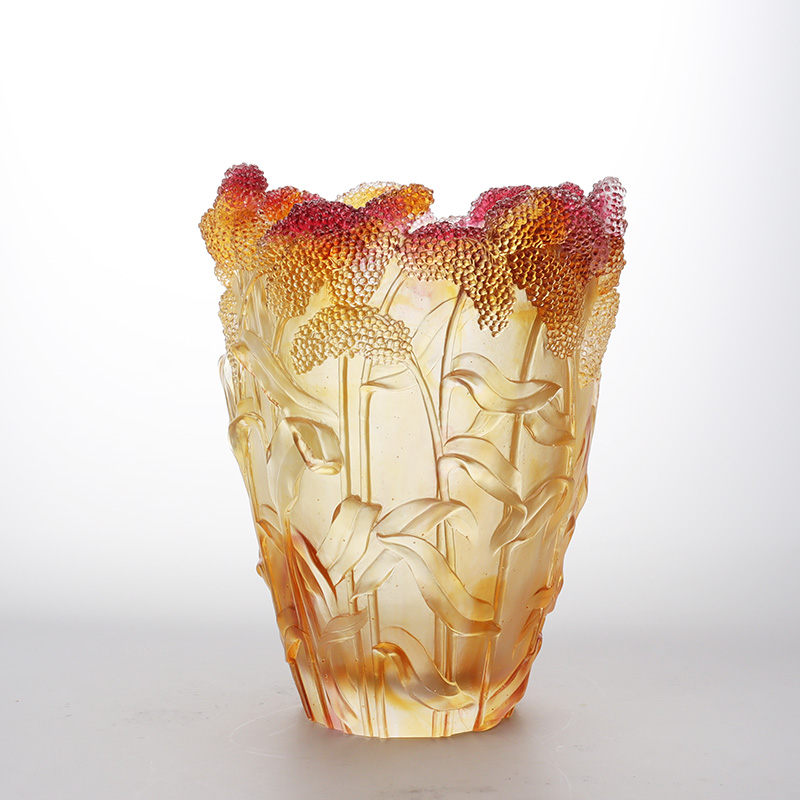
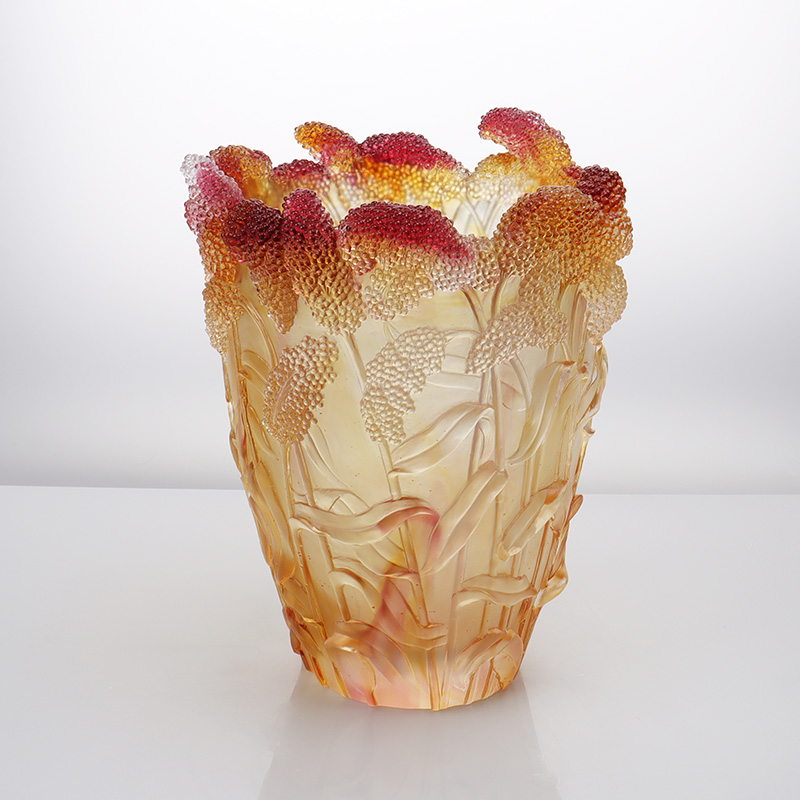
The birth of Harvest is an artistic dialogue rooted in the earth and tracing back to civilization. I anchored the vase's form with sorghum as its visual focal point, used gradient hues to unfold the rhythm of time, and invoked traditional DNA through lost-wax casting. My aim was to transform this static vessel into a living carrier of agricultural memory, the spirit of the times, and artisanal wisdom.
I. Sorghum: Poetic Translation from Crop to Cultural Symbol
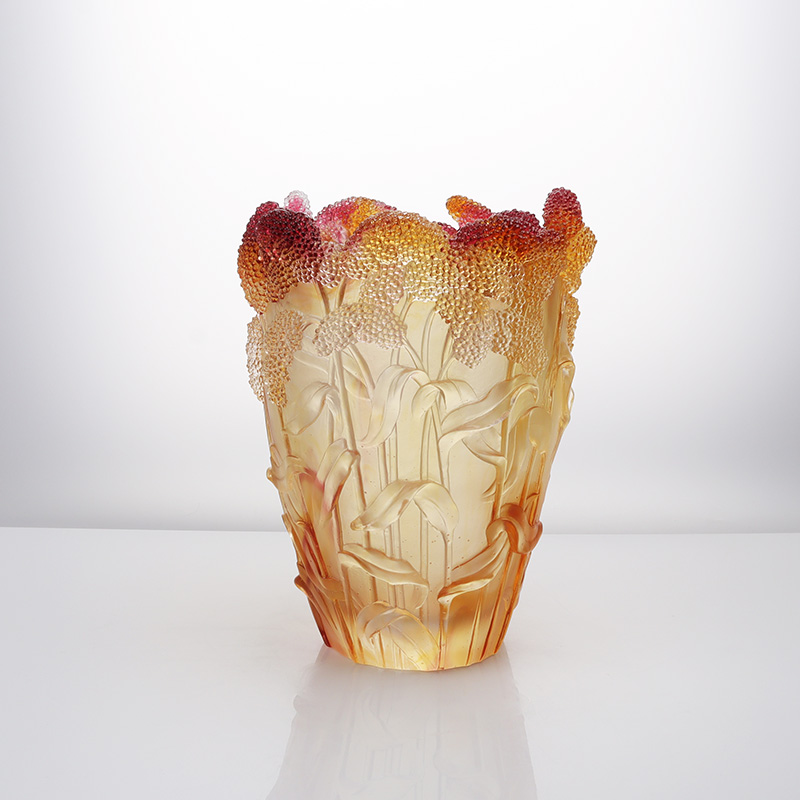
Sorghum was chosen for embodying the spiritual code of China's agrarian civilization: a witness to the northern land's “spring sowing, autumn harvesting” cycle. Its stalks stand tall like the unyielding backbone of life, while drooping ears reflect the humble character of abundance. The fiery red tips declare both mature vitality and the folk metaphor for “prosperous days.” In my creation, I abstracted the collective image of sorghum into a three-dimensional language—stems transformed into vertical supports for the vessel's body, while clusters of grains gathered into floral bouquets at the rim. This transcends the container's utilitarian function, making it a tangible narrative of “the earth bearing fruit.” When viewers gaze upon or touch it, they seem to feel the warmth of grains brushing against their fingertips, evoking empathy for the toil of “sweat dripping onto the soil beneath the crops” and gratitude for the earth's bounty.
II. Gradient Colors: A Chromatic Symphony of Time and Life
The bottle's transition from warm gold at the base to crimson at the tip visually translates the life cycle of “growth—maturity—harvest”:
- Warm gold at the base, like the mist over fields at dawn's first light, symbolizing hope and dormancy during cultivation;
- The mid-section's orange-yellow mirrors the intense midday sun, mirroring the vigorous growth of crops as they shoot upward;
- The crimson tip, like sunset hues bathing waves of grain, marks the pinnacle of maturity and harvest.
This gradient is not merely a visual layering but an embodied expression of the Chinese “unity of heaven and humanity” worldview—transforming a static vase into a vessel that flows with the rhythms of seasonal cycles, translating the agrarian wisdom of “aligning with the seasons” into tangible verses of color.
III. Lost-Wax Casting: Dual Empowerment of Traditional Craftsmanship
As the core technique of glass art, lost-wax casting infuses Harvest with soul and texture, achieving dual breakthroughs in “breathable detail” and “color symbiosis”:
(1) Detail: Life's Tremors at the Micron Level
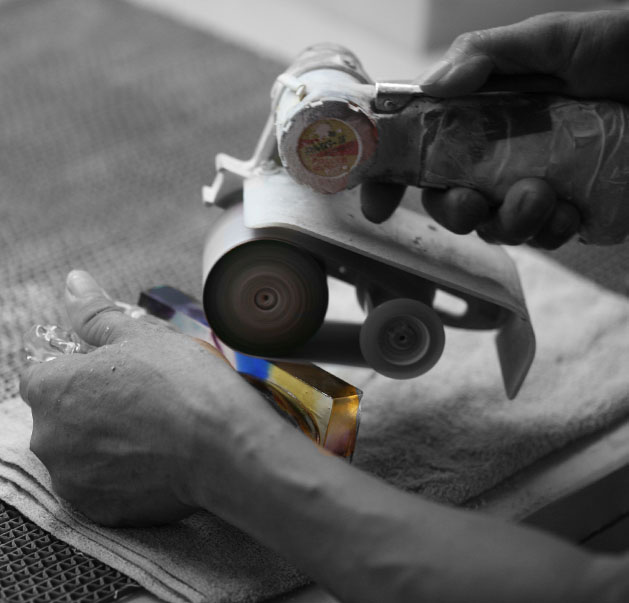
Sorghum ears require layered, melted wax molds: Each “grain's” plump roundness depends on controlling wax flow tension; leaf vein precision tests metal mold engraving accuracy. The subtractive logic of lost-wax casting (melting away wax, pouring molten glass) liberates microscopic forms from mechanical replication's coldness, generating the dynamic illusion of “wind-swept grain waves”—the undulating tips and curling leaves seem to breathe within light and shadow.
(2) Color: Natural Symbiosis in the Kiln's Fire
During lost-wax casting, pigments fuse and permeate at high temperatures, liberating gradients from mechanical division. The amber-hued halos where gold and red meet are serendipitous collisions between copper elements and the glass matrix within the thousand-degree kiln—perfectly mimicking the uneven sun exposure that lends crops their authentic texture. This “controlled chaos” infuses artificial craftsmanship with natural vitality—much like sorghum that endures wind and rain, basks in the sun, and ultimately develops its vibrant hues in the open fields.
IV. Beyond the Vessel: Resonance Between Old and New Civilizations
Harvest ultimately stands as a “contemporary expression of tradition”: the spiritual essence of sorghum is revitalized through the translucency of glass, while gradient hues use time as a brush to paint the poetry of agriculture. Lost-wax casting revives ancient techniques dormant in the modern era. When light filters through the vessel, the swaying shadows of ears of grain reveal not only the glass's crystalline clarity and the craftsmanship's subtlety, but also the sedimentation and rebirth of the earth's memory within the era—a reminder that harvest signifies not merely material abundance, but the intergenerational transmission of cultural genes and the creative vitality of traditional craftsmanship bursting forth in a contemporary context.
This piece is a harmonious convergence of material, craftsmanship, and culture—and an artistic response to the question of “where we come from and where we are headed”: emerging from the folds of the earth, we journey toward the new light of civilization.

 中文繁体
中文繁体
 English
 Français