 中文繁体
中文繁体
 English
 Français

Om Mani Padme Hum Bracelet: Meaning, Materials, and How to Choose the Right One
You are holding a strand of glass beads and six syllables you may not be able to read, and the practical question is whether this om mani padme hum bracelet is worth keeping. It usually comes down to three things: how the mantra is applied to the glass, how many beads sit on the strand, and whether the piece still looks right after a year of daily wear. A well-made colored crystal glass bracelet can hold a crisp engraving for decades. A weak one loses its elastic within a season, or arrives with an etching so shallow that it disappears in ordinary daylight.
So here is the order that works: buy for the practice the mantra supports, then for material and workmanship, and only then for styling. The rest of this article explains why that order matters and what to check before you pay.
What the Six Syllables Mean, One Unit at a Time
The mantra is not one phrase but six syllables grouped into four units, and the traditional reading of each unit shapes how the mantra is used in practice.
| Unit | Literal sense | Traditional reading |
|---|---|---|
| Om | A syllable built from three sounds | The unrefined body, speech, and mind of the practitioner, which the path transforms. |
| Mani | Jewel | The altruistic wish to reach enlightenment for the sake of others; compassion in action. |
| Padme | Lotus | Wisdom that grows unstained out of ordinary, messy experience. |
| Hum | A closing seed syllable | The indivisibility of method and wisdom, compassion and insight held together. |
Traditional commentaries read the four units as a compressed path rather than a charm. Reciting the mantra is described as polishing those qualities, not as requesting a favor. The practical consequence for a buyer is that legibility matters more than ornament: if you cannot read the syllables at arm's length in normal light, the engraving is too shallow or too small to do its job.
Where the Mantra Comes From and Why It Ended Up on Wristwear
The mantra is tied to Avalokiteshvara, the bodhisattva of compassion, known as Chenrezig in Tibetan practice and Guanyin in East Asian traditions. Its best-known textual source is the Karandavyuha Sutra, and it spread through the Himalayas on prayer wheels, mani stones, and prayer flags long before it appeared on jewelry.
In a monastery, recitation is counted on a mala of 108 beads, a number tied to traditional lists of mental afflictions and their remedies. Lay practitioners wanted something they could keep on while working, so shorter strands appeared at 54, 27, 21, and 18 beads, sized to sit under a cuff and slip off during a break. That shorter strand is the direct ancestor of the wrist bracelet.
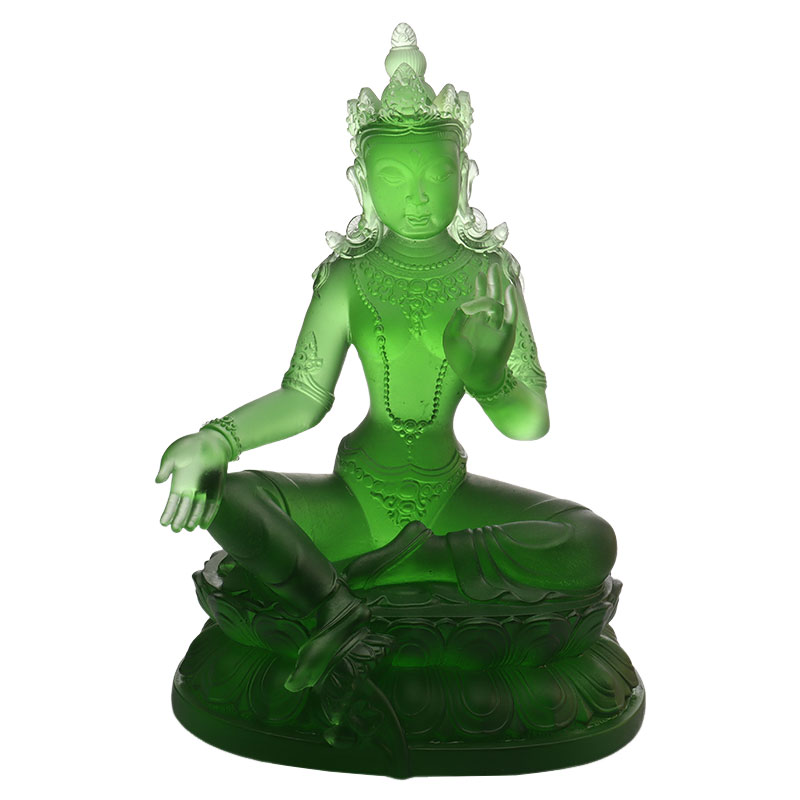
Glass is a latecomer to the form and a good one. Colored crystal glass can be cast, carved, frosted, or glazed, which means the mantra can be cut into the bead itself rather than printed on the surface, and the color survives where a coated bead would wear through. The same craftsmanship shows up in devotional sculpture.
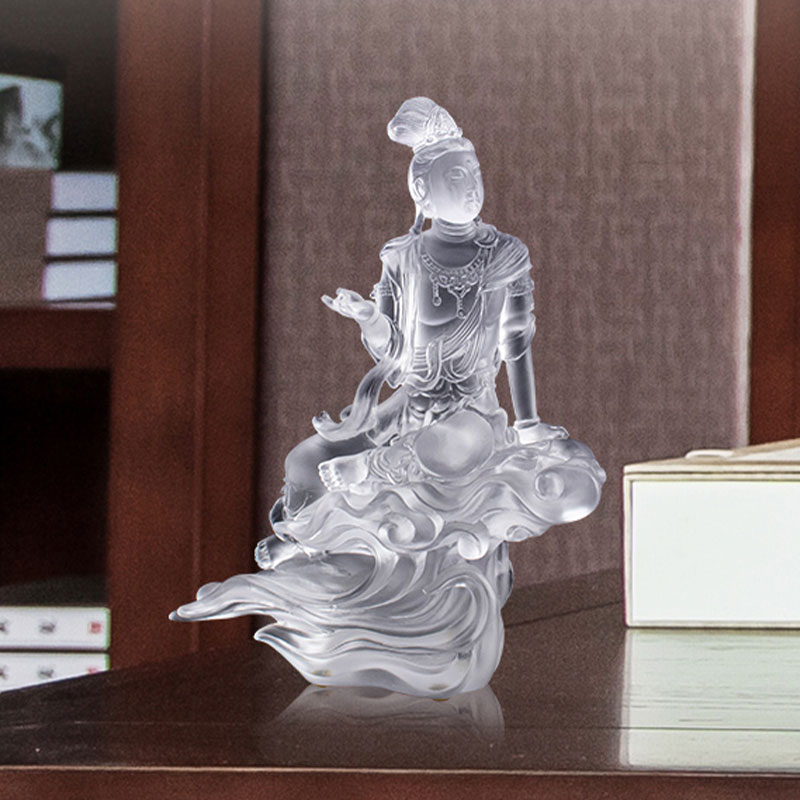 Avalokitesvara Bodhisattva Transparent Glass Guanyin SculptureTransparent glass or colored-glaze Guanyin sculpture with lost-wax fired details, smooth folds, and a peaceful expression for home or entrance decoration.View Product →
What the Bracelet Meaning Comes Down to in Daily Use
Strip away the ceremony and the bracelet is a prompt. It sits where you see it dozens of times a day, while typing, driving, or reaching for a cup. Each glance is a small interruption that asks whether you are acting out of patience or out of habit. That is the entire mechanism. No material carries an automatic guarantee, and a bead count is not a dosage; what changes is the attention you give.
That framing also settles most buying arguments. If the bracelet is a reminder, it should be comfortable enough that you forget you are wearing it and legible enough to stop you when you look down. A heavy, beautiful strand that comes off after twenty minutes is not doing the job.
How to Judge a Glass Om Mani Padme Hum Bracelet
Four checks catch almost everything that goes wrong with glass wristwear.
Material and Finish
Colored crystal glass is denser than pressed decorative glass and should feel cool and substantial. Hold the strand against a window: good beads show even color, no milky patches, no bubbles near the drill hole, and no sharp lip where the drill exited. Frosted beads should feel silky rather than gritty, which signals an even etch instead of a tumbled surface. The finishing stage is where cheap and good strands separate, and crystal decoration as an art of light explains that side of the craft in more detail.
How the Mantra Is Applied
Three methods dominate. Hand engraving cuts into the glass and lasts as long as the bead; run a fingernail across the strokes and you should feel crisp edges. Sandblasting through a mask gives an even frosted letter that reads well but sits shallower. Color-fill inlay sets pigment into a carved channel for the strongest contrast, and it is the most fragile if the pigment was not fully cured, because edges flake with wear. On an 8 mm bead, strokes shallower than roughly 0.3 mm tend to blur within a year.
Bead Count, Fit, and Closure
- 108 beads: full mala proportions, usually 8 mm, worn wrapped three times or as a necklace.
- 54 or 27 beads: half and quarter malas, comfortable on most wrists at 6 to 8 mm.
- 21 beads: the common wrist size, easy to keep on all day.
- 18 beads or fewer: a lighter strand, often paired with a pendant or spacer bead.
Measure your wrist with a soft tape and add 1 to 1.5 cm of slack. Tighter than that presses on the wrist bone; looser slides over the hand. For elastic, look for cord of at least 0.8 mm with a knot hidden inside a bead and sealed with a drop of glue. For clasps, a closed-loop hook in sterling or stainless steel beats an open S-hook that snags on sleeves.
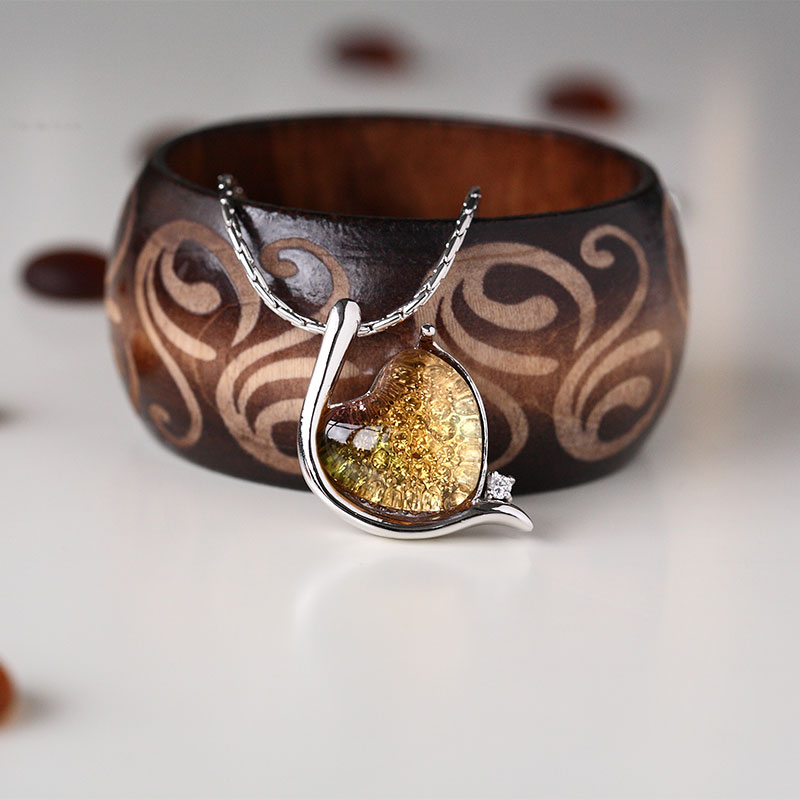 Elegant Silver Color Bracelet with Inlaid Glass PendantAn elegant silver-colored bracelet with a delicate chain and inlaid glass pendant, worn on the wrist for a refined jewelry accent.View Product →
Tolerance Checks in Person
- Roll the strand on a table; uneven beads wobble.
- Inspect every drill hole for chips or hairline cracks.
- Compare engraving depth across beads, since inconsistent depth means inconsistent tooling.
- Stretch the elastic gently and look for dry, frayed, or cracked cord where it exits a bead.
Wearing It Without Overthinking It
There is no required ritual for a wrist bracelet. In meditation, many people turn the strand bead by bead and recite the mantra once per bead, using the beads as a count. In yoga or intention setting, it is often worn on the left wrist and touched once at the start of practice. In daily life it simply stays on, which is the point of the shorter strand.
Take it off for anything that combines heat, chemicals, or impact: hot showers, swimming pools, saunas, and gym sessions. Thermal shock is the main enemy of colored glass, and a bead that goes from a hot shower to a cold tile floor can craze internally even when it does not crack on the spot.
Cleaning and Long-Term Care
Warm water with a drop of mild dish soap and a soft cloth handles almost everything.
- Rinse and dry immediately with a lint-free cloth instead of letting it air dry.
- Skip ultrasonic and steam cleaners, which stress internal glass.
- Avoid ammonia, alcohol, and acetone, especially on color-filled engraving.
- Store the bracelet in a soft pouch, away from metal that can scratch.
- Replace elastic every 12 to 18 months if you wear the strand daily.
- Retire the piece at the first chip at a drill hole, before the bead splits.
Sets, Gifting, and Batch Consistency
If the bracelet is a gift, matching the palette across a pendant, earrings, and a ring makes the set read as intentional rather than assembled. Staying inside one color family, whether amber, deep blue, or a blue-green gradient, keeps the pieces working together at a wrist and at a neckline.
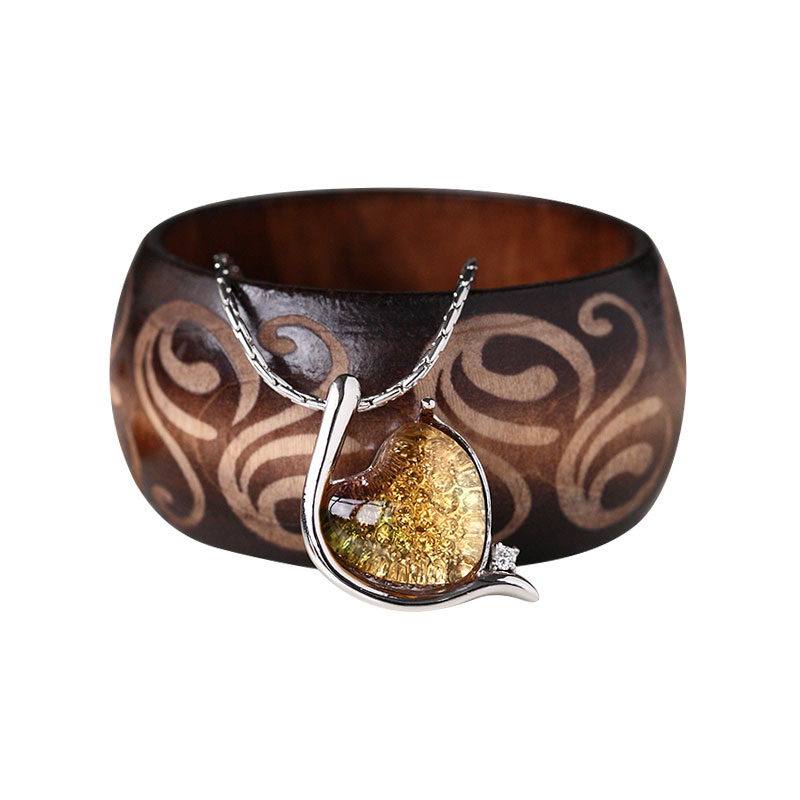 Colored Crystal Glass Bracelet with Cut Crystal Glass AccentsA silver-color bracelet with alloy base and cut colored crystal glass, offering unique fired color and facets for artistic daily wear or gifting.View Product →
For shops and resellers, the real risk is not design but consistency. Colored glass is made in batches, and a shade that matches in July can drift by January, so ask a supplier to hold a sample from the first order as the color reference for later runs. Check three things on a sample shipment: engraving depth measured on at least five beads, elastic tension tested on ten strands, and packing that keeps beads from rubbing together in transit. Small tolerances here decide your return rate far more than the pattern does.
A bracelet carrying the six syllables is a small, durable object with a long history behind it. Choose the mantra you actually intend to remember, choose glass that was finished rather than merely shaped, and choose a fit you will not want to take off.
The workshop behind JM-ARTFAMILY has been working in colored crystal glass since 2001, producing devotional figures, tableware, and jewelry from the same material, and can supply color references and engraving samples before you commit to a larger order.
 previous post