 中文繁体
中文繁体
 English
 Français

How to Choose a Lord Buddha Statue: Types, Materials, and Complete Meaning
A project manager once asked us to produce a Lord Buddha statue for a monastery hall where the piece would be seen from the far end of the room. The first questions had nothing to do with the face or the robe. They were about material, weight, and long-term color stability. That conversation is a useful starting point for any buyer: define the environment and the role first, then the meaning and the craft follow naturally.
A Lord Buddha statue is never merely decorative. It anchors a meditation space, expresses devotion, or honors the life and teaching of the historical Buddha. A well-chosen piece balances three things: iconographic accuracy, material suitability, and finishing quality. If any one of these is weak, the statue is less convincing as an object of reverence.
Choose the Material Before the Design
Material is the most practical decision you will make. Wood is warm and organic, but it is sensitive to humidity, insects, and dry rot. Bronze holds fine detail and gives a dignified presence, yet it is heavy and its patina changes with age. Stone is permanent and monumental, but it is expensive to ship and difficult to reposition. Glass and crystal offer a different balance. They respond well to indoor light, are easy to clean, and come in a broad palette that includes deep amber, ocean blue, soft jade, and luminous red.
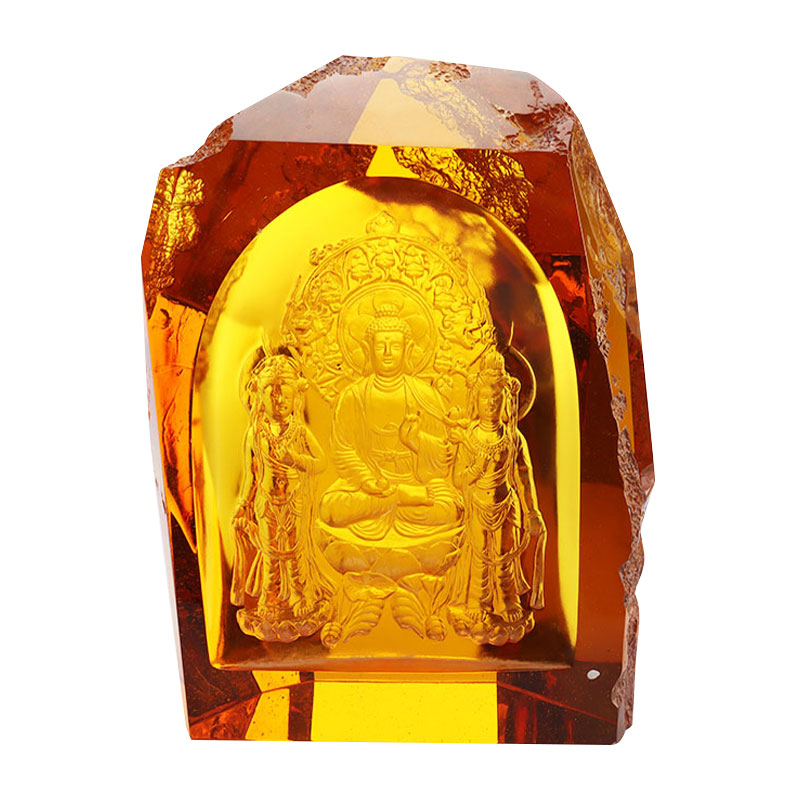
Colored glass also lets you match a statue to altar architecture, painted murals, or temple decorative panels. The material refracts light in a way that static surfaces cannot, giving the figure a living presence from morning to dusk. For a buyer who wants a radiant focal point, a seated Amitabha Buddha crystal statue is a strong candidate because it combines a traditional meditation form with the clarity of fine glass.
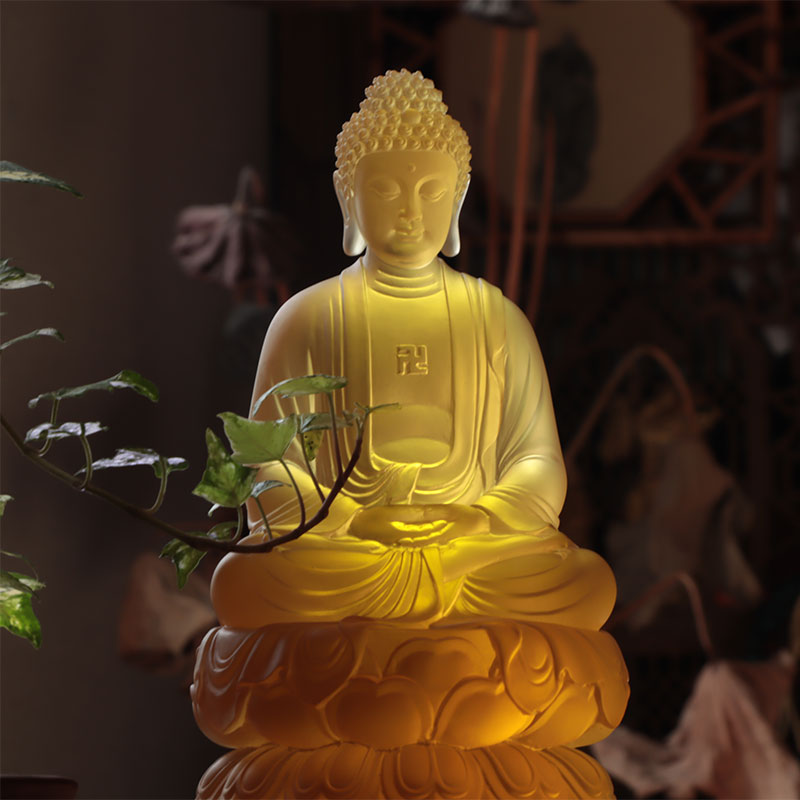 Custom Amitābha Buddha Crystal Statues Suppliers, Factory - Kunshan Jiangmen CulJM-artfamily is China Custom Amitābha Buddha Crystal Statues Suppliers and Factory, Amitābha Buddha Crystal Statues for sale, The picture...View Product →
If you are new to glass sculpture, take time to read about the history and techniques of glass sculpture before you commit to a purchase. It explains how color, thickness, and annealing affect the final piece, and why quality varies so much between studios.
Read the Posture and Gesture
The posture (asana) and the hand gesture (mudra) identify what the statue represents. These are not stylistic accidents; they are conventions refined over centuries. When you buy from a catalog, check the gesture carefully and ask the supplier if you are unsure.
| Posture | Hand Gesture | Meaning |
|---|---|---|
| Seated meditation | Hands resting in the lap | Calm, concentration, and inner stillness |
| Earth-touching | Right hand reaching down toward the ground | The Buddha's enlightenment; calling the earth to witness |
| Standing | Right hand raised, palm facing outward | Fearlessness, protection, and blessing |
| Walking | One foot forward, right hand raised | Compassionate engagement after enlightenment |
| Reclining | Lying on the side with the head supported | The Buddha's final passing; peace and release |
In glass statues, mudras must be distinct enough to read from a normal viewing distance. A detail that looks sharp in a photograph can disappear into a soft blur on a shrine if the carving or molding is shallow. Confirm that the gesture lines are clearly defined before you order.
Know Which Buddha You Are Honoring
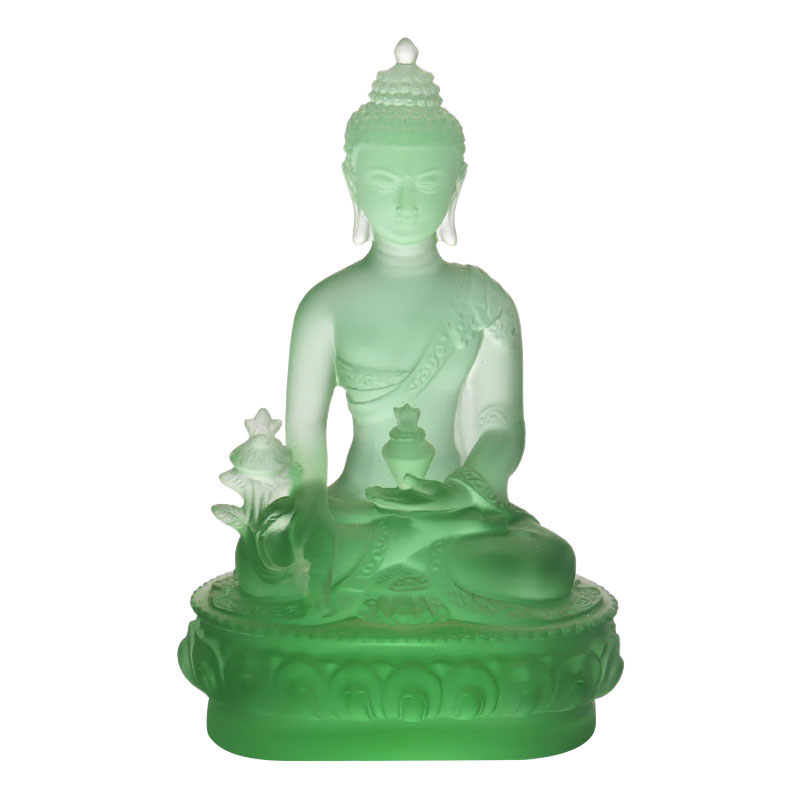
Not every serene figure in a meditation pose represents the same Buddha. The historical Buddha, Sakyamuni, usually appears with an earth-touching gesture or in deep meditation, sometimes under a small tree motif. Amitabha Buddha, associated with boundless light and the Western Pure Land, typically sits with hands folded in meditation and is often expressed in red or gold. The Medicine Buddha holds a medicine bowl and is traditionally shown in a deep blue tone, a convention that translates naturally into colored glaze. For projects connected with healing, recovery, or health wishes, a colored glaze Medicine Buddha statue gives that intention a clear visual form.
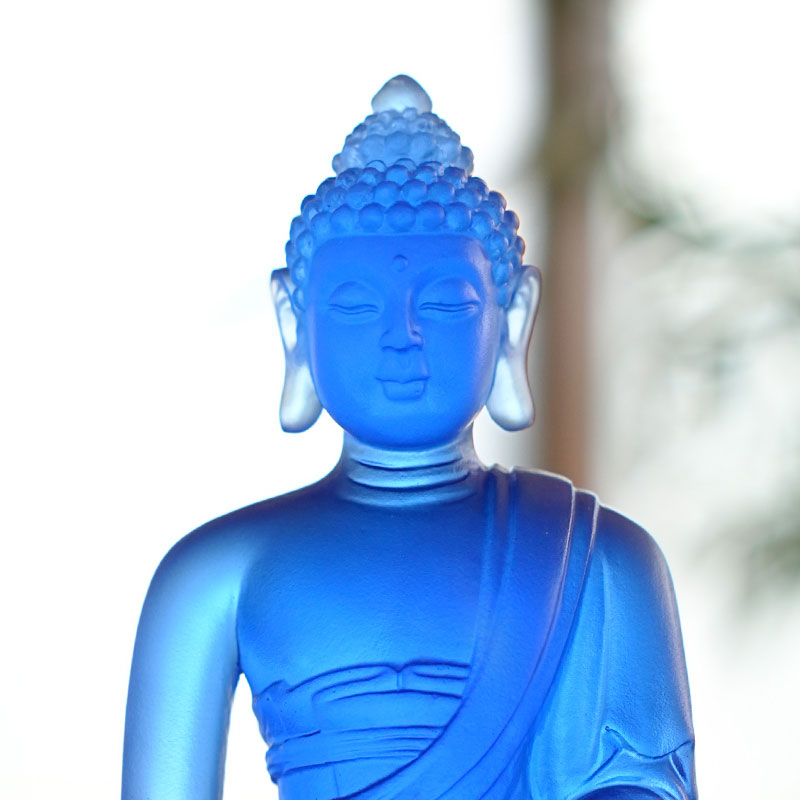 Custom Colored glaze Medicine Buddha statues Suppliers, Factory - Kunshan JiangmJM-artfamily is China Custom Colored glaze Medicine Buddha statues Suppliers and Factory, Colored glaze Medicine Buddha statues for sale,...View Product →
The Dipamkara Buddha, a past-life Buddha, is sometimes shown with a lotus or a flame halo, while the Maitreya Buddha, the future Buddha, appears with a relaxed and cheerful expression. These distinctions prevent a common buyer's error: selecting a figure only by color or size, then realizing that the iconography does not match the spiritual purpose.
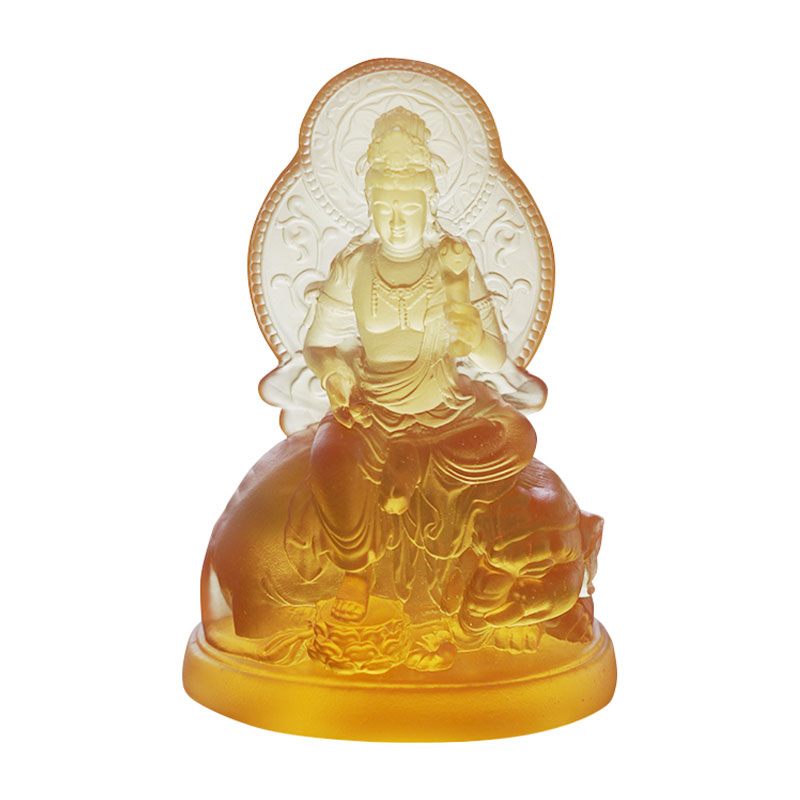
If you are setting up a pure-land altar, Amitabha is rarely displayed alone. In many Chinese Buddhist traditions, he is flanked by two bodhisattvas, Guanyin and Mahasthamaprapta, in a grouping known as the Three Western Saints. This changes your planning from a single statue to three pieces that share a consistent scale and color scheme. For a new altar, the Three Western Saints glass figurine set removes the guessing work of matching heights and finishing.
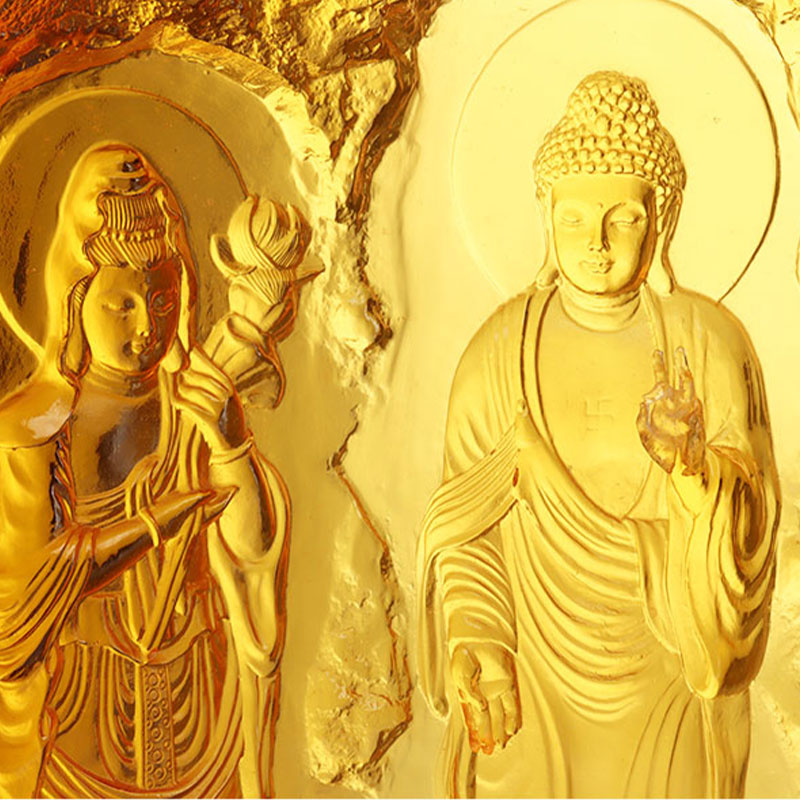 Custom Three Western Saints Buddha Glass Figurines Statue Suppliers, Factory - KJM-artfamily is China Custom Three Western Saints Buddha Glass Figurines Statue Suppliers and Factory, Three Western Saints Buddha Glass ...View Product →
Inspect the Craftsmanship
Craftsmanship separates a devotional object from a rough souvenir. Start with the face. The eyes should be downcast but serene, the mouth balanced, and the earlobes elongated in the traditional manner. Then examine the robe. The cloth lines should flow without abrupt breaks or asymmetric folds. In a glass statue, check the interior for bubbles, cracks, or large inclusions that could weaken the structure. Set the piece on a flat surface to confirm the base is level and the weight is stable.
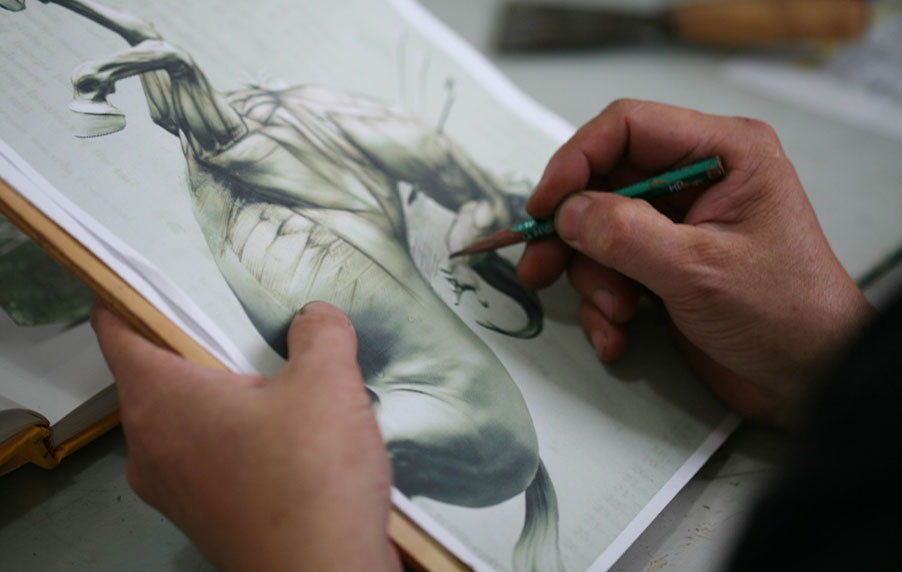
Color quality matters just as much. A good colored glaze piece shows deep, even saturation at its thickest parts and a subtle gradient where the glass thins. The polish should feel smooth without looking plasticky. These details are the fingerprints of the maker. Before placing a large order, review the maker's background through its company profile, and ask for production photographs. A manufacturer that stands behind its process will welcome the inspection.
Size, Placement, and Light
Measure the altar or niche before you buy. A statue that is too large dominates the space and leaves no room for offerings; one that is too small gets lost against a large wall. As a general rule, keep the statue height between one-third and one-half of the height of the altar area behind it, and position the head at or slightly above eye level when you are seated in front of it.
Placement depends on material. Glass statues need a stable shelf and indirect light. A window beside the altar can make a colored glass figure glow during certain hours, but avoid long, direct sunlight on any dyed or painted glass piece. For outdoor installation, weather exposure is severe, so it is wiser to choose a material that is known to survive the climate in your region.
Keep the Statue Clear With Simple Care
Glass is easier to maintain than most people expect. Dust the statue weekly with a soft, dry cloth. When it needs deeper cleaning, wipe it with a damp cloth and a single drop of mild soap, then dry it immediately to prevent water spots. Protect it from sudden temperature changes, because rapid heating or cooling can create stress lines. Avoid alcohol, acidic cleaners, and abrasive sponges. These simple habits will preserve the color and polish for decades.
Choosing a Lord Buddha statue is a quiet process of matching intention with form. If the piece steadies your meditation, strengthens a prayer corner, or gives a temple hall the right sense of presence, it has done its work. Let the material serve the place, let the posture express the meaning, and take time to inspect the craft. A piece that passes those three tests will remain a worthy companion for years to come.
 previous post