 中文繁体
中文繁体
 English
 Français

108 Prayer Beads: Complete Guide to Meaning, Structure, Materials, and Use
You can recognize a serious mala by one detail: it has 108 beads. The number is not random. It lets you repeat a mantra 108 times without watching a clock, and it carries layers of meaning from both Hindu and Buddhist practice. The practical question is not just what 108 means, but which mala to choose and how to use it.
What a 108-Bead Mala Is and How It Is Structured
A traditional mala is a string of beads used for counting mantra repetition. The structure matters more than the outward look because the beads are a tactile tool, not simply a necklace.
| Part | Purpose |
|---|---|
| 108 counting beads | One bead is moved forward for each mantra repetition. |
| Guru bead | A larger bead that marks the start and end of a complete round. It is also called the meru or bindu in different traditions. |
| Spacer markers | Beads placed at regular intervals, often after 21 or 27 beads, to help you pause without losing count. |
| Tassel or knot | Attached below the guru bead for holding and for the visual finish of the mala. |
The counting rule is simple: one bead, one repetition. The guru bead is never counted as a mantra bead. Spacer beads may be made from a different material so your thumb can feel the pause even when your eyes are closed.
Why 108 Beads Carry That Meaning
The simplest answer is that 108 represents completeness. It appears differently in Hinduism, Buddhism, and yoga, but the common thread is a full cycle of attention.
Hindu tradition
In Hindu practice, 108 is treated as a sacred number that reflects cosmic wholeness. It appears in the 108 names of deities, in the 108 Upanishads, and in the number of murtis or devotional forms used in puja. Many practitioners believe that a full round of 108 repetitions covers all aspects of a single divine name.
Buddhist tradition
In Buddhism, 108 beads are often linked to the 108 worldly afflictions or defilements. The idea is not to count your problems, but to work through them one by one. Reciting a mantra 108 times is a way of acknowledging that a single repetition is not enough; the mental habit needs repetition before it becomes clear.
Yoga and the human body
Yoga traditionally uses 108 as a measure of physical and energetic completeness. It is said that 108 energy lines meet in the heart chakra, and one full cycle of sun salutations is often 108 movements. The number also appears in astronomical and mathematical observations, but for everyday practice it is simpler to see 108 as a meaningful number of repetitions: long enough to settle the mind, short enough to finish with intention.
When you choose a 108-bead mala, you are choosing a tool that assumes 108 repetitions is a meaningful full cycle. That assumption should guide how you buy and use it.
What to Look For in a Mala: Material and Craft
Pick a material by how you will store, hold, and clean the mala. Wood feels warm and soft in the hand, seed beads are light and natural, stone is heavier and cooler, and crystal glass can add clarity and light.
| Material | Feel | Watch Out |
|---|---|---|
| Bodhi seed | Hard, smooth, and very traditional. | Can attract moisture; keep it dry. |
| Sandalwood or rosewood | Warm, lightweight, and soft to the touch. | Can crack or fade if left in direct sunlight. |
| Crystal glass | Cool, smooth, and reflective. | Colored glass can fade under strong sunlight; clean with a soft cloth. |
| Stone | Heavy and durable. | May feel cold on the fingers at first. |
Glass and crystal have a special place when you want a meditation object that plays with light. If you want to understand how color, transparency, and engraved pattern affect a finished glass piece, this site's guide to crystal decoration is a useful reference.
How to Use a 108-Bead Mala in Meditation
The mala works best when the motion becomes automatic. You do not need to watch the beads; you need to feel them.
Holding and counting
Drape the mala over the fingers of your right hand and use your thumb to move each bead. Avoid using the index finger, which is traditionally reserved for pointing or criticizing. Start after the guru bead, say your mantra or prayer once, and move one bead toward you. Do not cross the guru bead until you finish 108 repetitions. If you want to continue, turn the mala around and head back the other way.
Add a visual focus
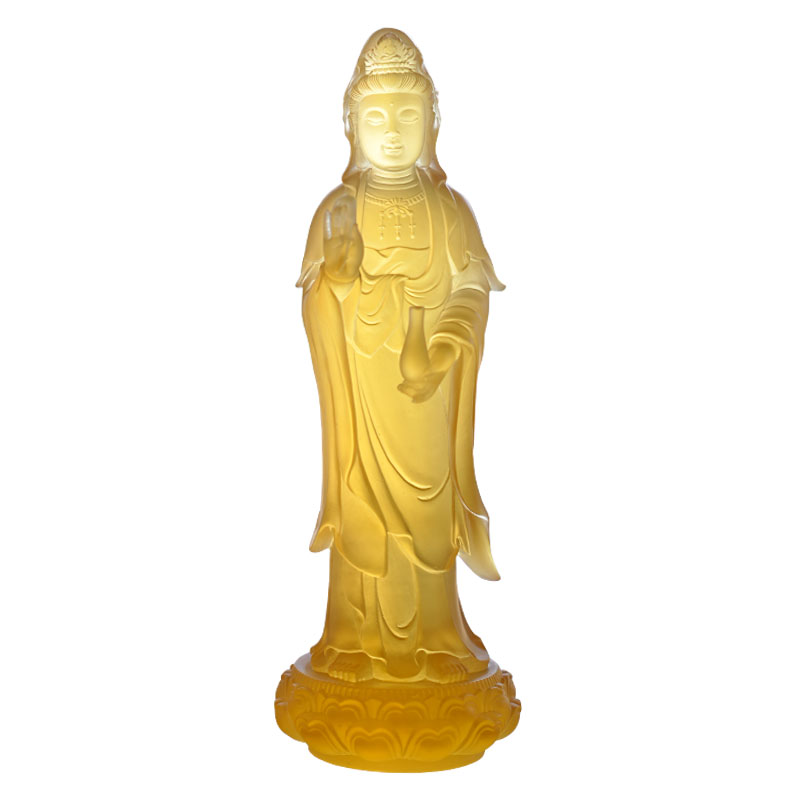
Many practitioners place an image or statue in front of their seat. A visible form, such as a Buddha figure, gives the eye a resting place when the mind wanders.
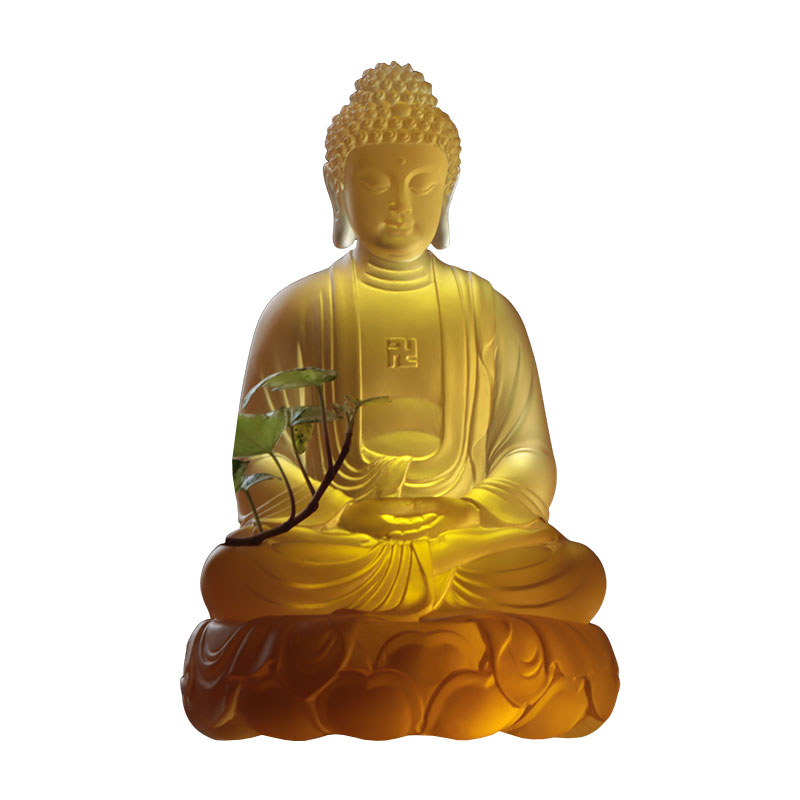
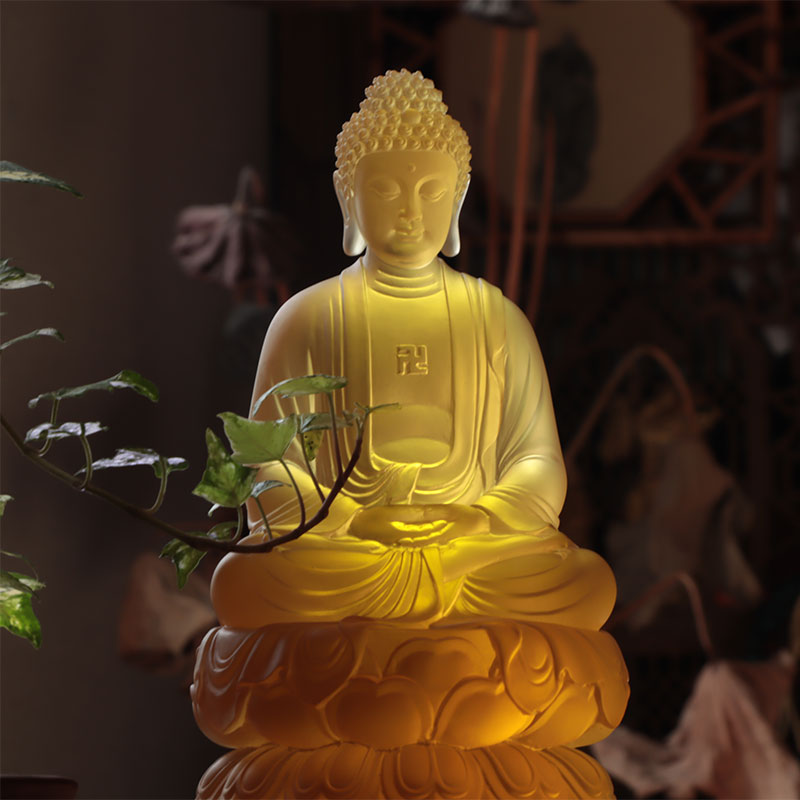 Amitabha Buddha Crystal Statue for Meditation AltarA glass statue of Amitabha Buddha, the Buddha of Infinite Light and Life, provides a focal point for meditation. Placing it on your shrine helps steady the mind and inspires devotion to the Western Paradise.View Product →
Build a small altar
A small altar can be very simple. Put the mala on a clean cloth, add a small offering set or a candle, and keep the space free of clutter. The goal is not to create a complicated ritual, but to make the start of practice feel clear and calm.
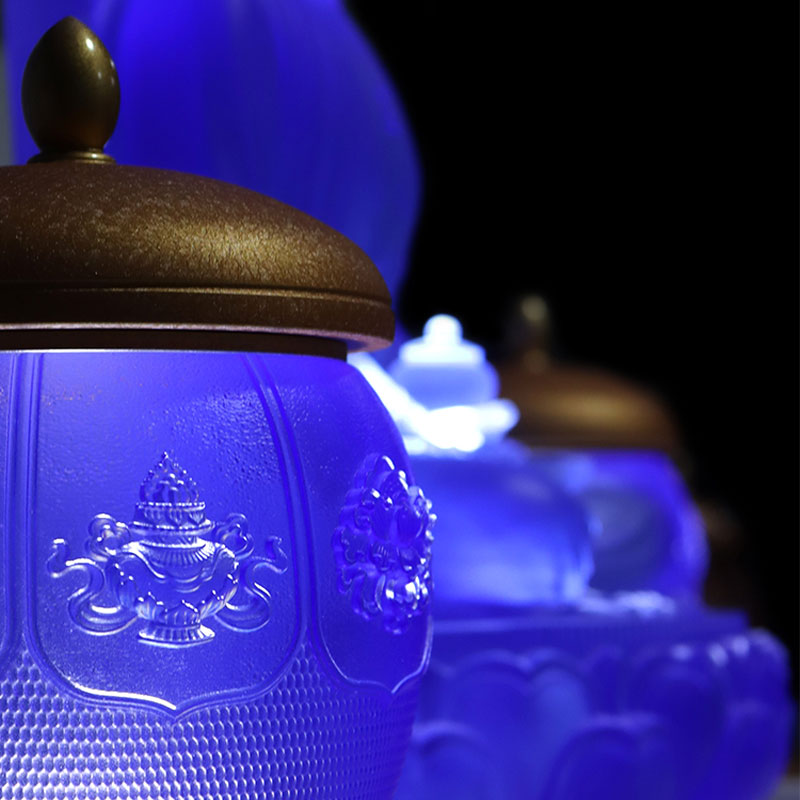 Eight Treasures Lotus Altar Offerings Set in Royal Blue GlassThis elegant set includes an incense burner, offering bowls, and fruit ornaments in deep blue crystal glass. It brings a sacred atmosphere to your altar, supporting ritual practice and mindful offerings.View Product →
Common Mistakes When Buying 108 Prayer Beads
Most mistakes are avoidable if you ask a few specific questions before purchasing.
- Does the mala include 108 counting beads or 108 total beads? Some makers count the guru bead as part of the 108. That is fine, but it changes the way you count. Ask for the full count before you commit.
- How is the knot tied? A loose knot makes the beads slip and can wear the cord faster. Look for a knot that holds each bead but still lets the string move.
- What will the color do over time? Dyed wood, synthetic resin, and colored glass all react differently to sweat, sunlight, and air. If you plan to use the mala daily, ask about color fastness.
- Is the cord natural or synthetic? Natural cords feel softer but can stretch. Synthetic cords last longer but can feel less tactile.
Making the Mala Part of a Larger Practice Space
Home practitioners often focus only on the beads, but the room itself can support attention. A quiet corner, a clean wall, and a stable surface help you return to the same practice every day. In temple or community spaces, the visual background matters even more.
Colored crystal glass bricks can give a wall behind the altar a gentle reflective quality without making the room busy. If you are choosing materials for a dedicated meditation room or shrine area, a glazed brick can be a practical wall treatment.
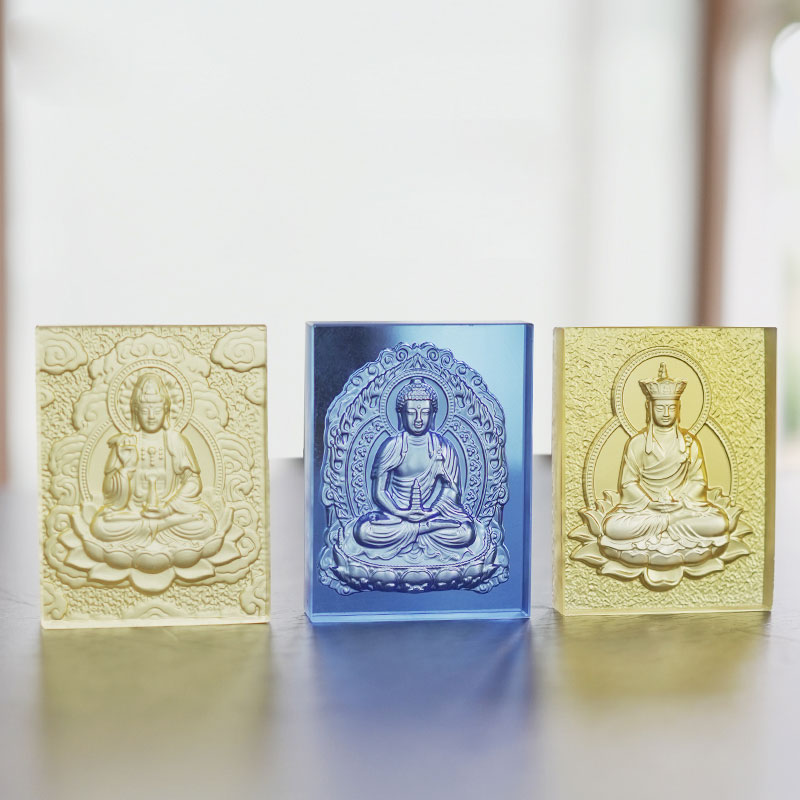 Light Blue Glazed Medicine Buddha Wall BricksCrafted with ancient lost-wax casting, these glazed bricks feature serene Medicine Buddha imagery. Their soft reflective quality enriches shrine walls, creating a calm and sacred backdrop for meditation.View Product →
Care and Maintenance for a Daily Use Mala
Treat the mala like a tool you use often, not like a piece that stays in a box. The material determines the maintenance routine.
- Keep wood and seed beads away from humidity and strong sunlight.
- Clean crystal glass with a soft cloth and mild soap. Avoid abrasive scrubbers.
- Check the cord every few months, especially if you use the mala daily and the beads move quickly.
- Do not leave a glass or crystal mala near a radiator or in a car in direct sun. Sudden temperature changes are harder on glass than on wood or stone.
No matter what material you choose, a 108-bead mala asks you to slow down. It gives your hands a simple job while your mind settles into one repetition at a time. If you understand the structure, the meaning, and the care needed, you will choose a mala that lasts and a practice that becomes part of your routine.
 previous post