 中文繁体
中文繁体
 English
 Français

Buddha with Beads: Meaning, Symbolism, and How to Choose the Right Statue for Your Altar
Understanding the Buddha with Beads
When you walk into a temple hall or a collector's showcase, the image of a Buddha with beads often stands out. The figure may rest one hand on a string of round beads, or a mala may be draped over the statue's crossed legs. This combination is easy to read as a symbol of contemplation, yet it carries more practical meaning than many observers expect. The Buddha with beads represents the meeting point between the awakened mind and the simple tool used to train it.
Buddhist texts describe how the Buddha taught a king to use a string of beads to stay mindful of sacred words. The practice spread across Asian traditions, and the beads became a familiar companion to statues and paintings. When you see a Buddha with beads, you are looking at a visual reminder that enlightenment is not a distant ideal but a habit of attention built one bead at a time.
What the Beads Represent
Beads in Buddhist imagery stand for continuity, patience, and method. Each bead is a step in a sequence. Together, the string suggests that countless small actions create a stable spiritual path. The guru bead, often larger than the others, marks the starting point. In many traditions, practitioners treat it as a sign of the teacher or the Buddha himself. Seeing this bead in a statue's hand helps to explain why the composition feels balanced and purposeful.
Why 108 Beads Matter
Most malas contain 108 beads, and the number appears throughout Buddhist symbolism. Some schools explain it as the 108 types of negative emotions or defilements that disturb the mind. Others connect it to the 12 links of dependent origination multiplied by the six senses. The exact interpretation varies, but the function remains the same: reciting one mantra per bead clears the mental space left by each distraction. A Buddha with beads, then, is a teaching about the work of letting go.
Anatomy of a Buddhist Mala
Understanding the parts of a mala helps you appreciate what the Buddha with beads motif is showing. A well-made mala is not a random string; every element has a role in guiding the practitioner through a steady rhythm of recitation.
| Part | Role in practice | Typical appearance |
|---|---|---|
| Guru bead | Marks the start and end of each round | Largest bead, often with a tassel |
| Main beads | Count mantras or breaths | 108 uniform beads |
| Spacer beads | Separate groups of beads for orientation | Placed after every 27 or 36 beads |
| Counters | Track completed rounds | Small extra beads on a loop |
| Tassel | Finishes the mala; can symbolize merit | Woven cord or silk threads |
When a statue displays these details, it does more than decorate the shrine. It invites the viewer to pick up a similar string and begin the same steady repetition.
How to Use a Buddha with Beads in Practice
The image does not have to remain passive. You can integrate it into daily practice by pairing the statue with a real mala. The key is to let the statue serve as a visual anchor while your hands give your mind a familiar rhythm.
- Place the Buddha statue at eye level on a stable surface, with the mala resting across its base or over its hands.
- Hold the mala in your free hand and begin reciting your chosen mantra or following your breath. Move from one bead to the next without rushing.
- When you reach the guru bead, pause or turn the mala around rather than stepping over it, following the custom of your tradition.
- Between sessions, lay the mala back near the statue. This simple act turns the image into a practical reminder of the practice you are building.
Different traditions approach the mala in their own way. Tibetan practitioners often use it during mantra recitation, while Zen students may use its rhythm to follow the breath. Lay Buddhists may simply keep a bead bracelet on hand as a reminder to pause. The statue gives the practice a visible home, and the beads give the hands a familiar place to return.
Choosing a Buddha with Beads: Materials and Craft
Selection should start with the material of the beads and the statue. Wood and seed beads feel warm in the hand but require more careful handling. Stone and jade are durable yet heavy. Crystal and glass offer a different advantage: they catch light, hold rich color, and are easy to keep clean. For a shrine that balances beauty and function, that clarity is often the deciding factor.
- Glass beads allow a wider range of colors and surface finishes, from frosted to deep translucent glaze.
- Crystal forms can be carved into smooth, precise shapes that feel comfortable to touch.
- Glass statues resist cracking from humidity, making them suited to changing indoor conditions.
- The light-transmitting quality of glass echoes the mental clarity that the Buddha with beads is meant to inspire.
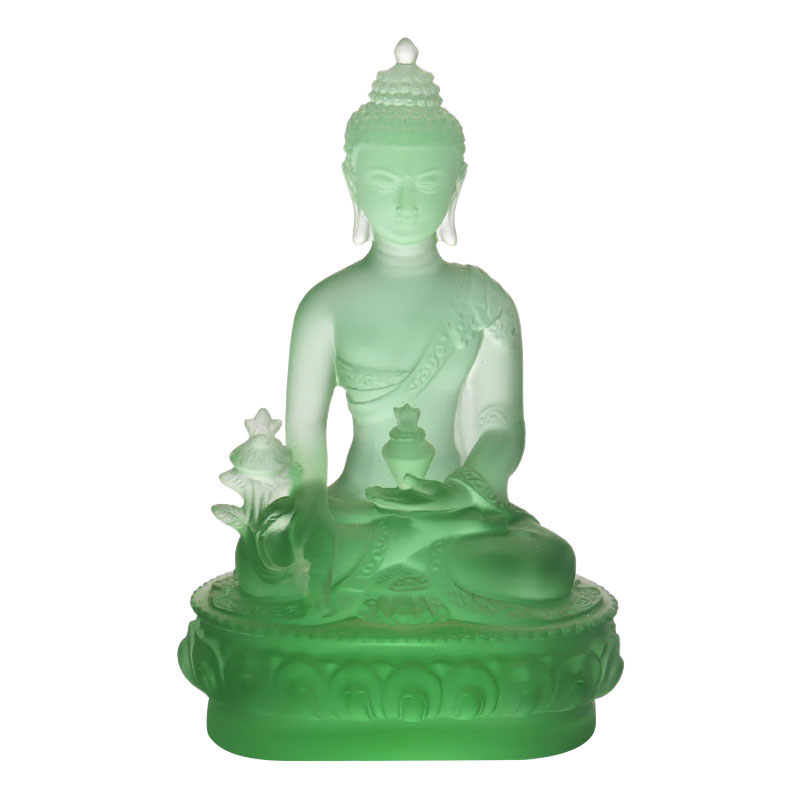
Among glass art studios, the same principles apply to figural sculpture. JM-ARTFAMILY, for example, produces Buddhist statues where the crystal body and its glazed surface catch light from any angle. A crystal Amitabha Buddha statue can anchor a shrine that also carries a simple mala; the clarity of the material echoes the clear intention of the practice. For those who focus on healing and compassion, a colorful liuli crystal Medicine Buddha statue creates a bright visual center for meditation. The rich blue-green glaze and the translucent body bring a contemporary feel to a traditional subject.
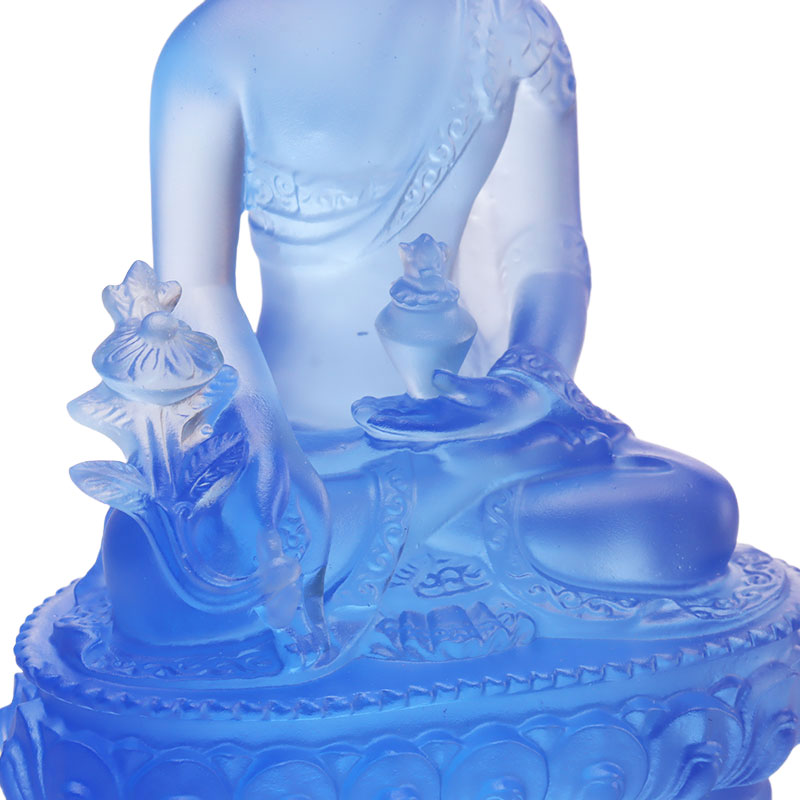 Custom Colorful Liuli Crystal Medicine Buddha Statue Suppliers, Factory - KunshaJM-artfamily is China Custom Colorful Liuli Crystal Medicine Buddha Statue Suppliers and Factory, Colorful Liuli Crystal Medicine Buddha ...View Product →
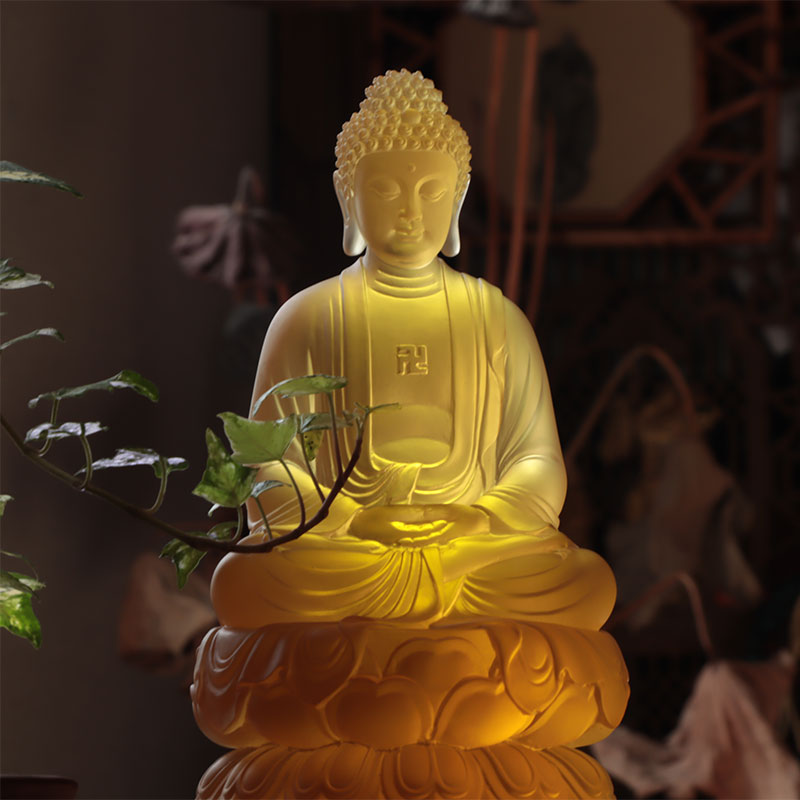 Custom Amitābha Buddha Crystal Statues Suppliers, Factory - Kunshan Jiangmen CulJM-artfamily is China Custom Amitābha Buddha Crystal Statues Suppliers and Factory, Amitābha Buddha Crystal Statues for sale, The picture...View Product →
To understand how such pieces are formed, our guide to art glass sculptures covers the casting, shaping, and finishing techniques that give each figure its depth. The same craftsmanship also affects the tactile quality of glass beads, making them easier to hold during long periods of recitation.
Caring for a Glass Buddha Statue
Glass does not absorb dust like wood, but it still needs gentle handling. Wipe the surface with a soft, dry cloth when the statue develops a light film. If more thorough cleaning is needed, use a damp cotton cloth with a drop of mild dish soap, then dry it immediately. Avoid harsh chemical cleaners and sudden temperature changes, which can stress the glaze. With modest care, a glass Buddha with beads will retain its color and sparkle for years.
Placing Your Buddha with Beads at Home
Position matters because the statue becomes a destination for your eyes every time you sit down to practice. A shrine tucked beside a busy window or right next to a television makes it harder to preserve the quiet mood that the image is meant to create.
- Choose a clean, stable surface at or above seated eye level.
- Place the mala near the statue without blocking the face or hands.
- Keep the shrine away from direct heat sources and prolonged, intense sunlight so the colors stay true.
- Use a small tray or cloth under the statue to define the sacred space and make regular cleaning simple.
For a shrine that honors the Buddha together with his attendants, the Three Western Saints glass figurine set fills the altar with a balanced composition while the beads in front provide a clear place to focus the mind. Crystal ornaments also interact with surrounding decor; for ideas on integrating light and color into interiors, see how crystal decoration brings elegance to living spaces.
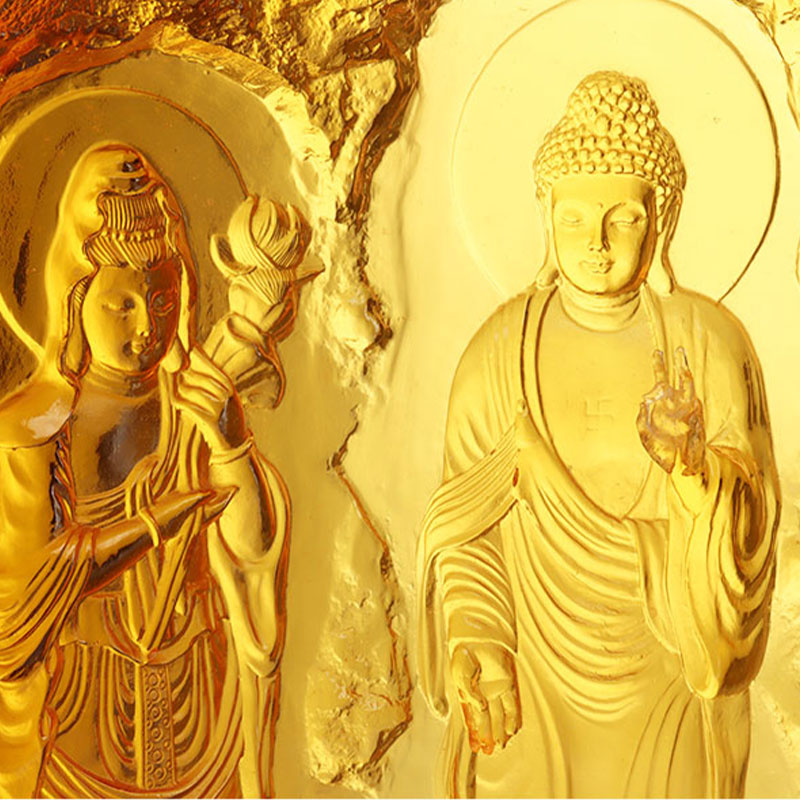 Custom Three Western Saints Buddha Glass Figurines Statue Suppliers, Factory - KJM-artfamily is China Custom Three Western Saints Buddha Glass Figurines Statue Suppliers and Factory, Three Western Saints Buddha Glass ...View Product →
Closing Thoughts
A Buddha with beads is not a novelty to be solved; it is an invitation to practice. The beads remind you of repetition, the statue reminds you of the goal, and together they turn a shelf into a quiet corner of reflection. If you are ready to build that corner, explore the JM-ARTFAMILY glass art collection to compare forms, sizes, and colors before you choose.
 previous post