 中文繁体
中文繁体
 English
 Français

The Bangle Jade Buying Guide: Types, Quality Factors, Treatments, and Sizing
Imagine two jade bangles side by side. Both are green, both are round, and both carry labels that say "natural jade." One sells for $200, and the other for $2,000. The difference is not luck or branding; it comes from a small set of characteristics that most shoppers never learn to identify. This guide explains those characteristics in practical terms, covering the two minerals sold as jade, the four quality factors that drive price, the treatment grades that change a stone's value, and the sizing method that determines whether a bangle actually fits.
What Defines a Jade Bangle
A jade bangle is a solid, circular bracelet with no clasp. The wearer slips it over the hand, and once it is on, the unbroken ring sits against the wrist. That simple shape carries a strong cultural history in Chinese communities, where it symbolizes wholeness, protection, and continuity between generations. Because a bangle must be cut from a single block of jade and drilled through the center, any hidden crack can destroy the piece during carving. That is why a flawless bangle is so much rarer, and so much more expensive, than one with visible lines or cloudy patches.
Jadeite vs. Nephrite: The First Question to Ask
The single most useful question you can put to a seller is whether the bangle is jadeite or nephrite. The answer tells you more about fair pricing than any other detail.
- Jadeite is the rarer mineral and the source of the vivid greens, lavenders, and orange-yellows that collectors prize. It is harder, takes a sharper polish, and top grades are among the most expensive gem materials on earth.
- Nephrite is more common and appears in softer greens, creams, whites, and grays. It has a slightly denser, more buttery texture and is usually far more affordable.
Both are genuine jade, but they are not interchangeable. If a label says only "jade," ask which mineral it is and how it has been treated.
The Four Quality Factors That Determine Value
The value of a jade bangle depends on four characteristics: color, transparency, texture, and uniformity. A bangle that performs well on all four will cost substantially more than one that performs well on only a single factor.
- Color. Vivid, evenly saturated green is the most prized shade in jadeite, followed by pure lavender and clean white. Gray, muddy, or brownish tones reduce value.
- Transparency. High-grade jadeite is semi-transparent; when you hold it toward a light source, it glows from within. Opaque or chalky stones grade lower.
- Texture. The surface should feel smooth and look fine-grained. A coarse, sandy texture signals a less mature stone.
- Uniformity. Color and pattern should be consistent around the whole bangle. Streaks, blotches, and uneven banding hurt both looks and price.
| Factor | What to Look For | What to Avoid |
|---|---|---|
| Color | Vivid, saturated, evenly distributed green | Gray tones, muddy brown, uneven color |
| Transparency | Light passes through with a soft glow | Opaque, chalky, or milky appearance |
| Texture | Fine, smooth, uniform grain | Coarse or visible crystalline texture |
| Uniformity | Consistent color and pattern around the band | Patchiness, visible lines, or dark spots |
A-Grade, B-Grade, C-Grade: How Treatments Change a Bangle
Not every jade bangle is natural, even when the seller uses the word "jade." The industry uses a simple letter system to describe treatment history.
- A-grade jade is natural and has received only traditional waxing. This is the only grade considered untreated.
- B-grade jade has been bleached with acid to remove impurities and then filled with polymer resin to restore stability.
- C-grade jade has been dyed to add or intensify color.
B-grade and C-grade bangles can look bright and attractive in the shop, but they are less durable and may discolor, craze, or dull over time. Always ask for a written statement of grade, and be suspicious of anything priced far below comparable A-grade pieces.
Common Buying Mistakes and How to Avoid Them
Most buyers regret the same handful of mistakes. Knowing them in advance will save you both money and disappointment.
- Trusting the label "real jade." Ask for the mineral type and the treatment grade in writing.
- Testing by scratching glass. Some treated jade can scratch glass too. This old test proves almost nothing.
- Ignoring cracks. A thin line on the surface can be a crack that runs deep. Examine the bangle under strong light and rotate it slowly.
- Sizing by wrist circumference. The hand, not the wrist, determines whether a bangle can be put on and taken off comfortably.
How to Measure for a Bangle
Fold your thumb toward the base of your little finger, then wrap a piece of string around the widest part of your closed hand. Mark the point where the string meets, lay it against a ruler, and compare the measurement to a bangle size chart.
| Bangle Inner Diameter (mm) | Hand Circumference (mm) | Expected Fit |
|---|---|---|
| 52 | 71-75 | Snug |
| 54 | 76-80 | Comfortable |
| 56 | 81-85 | Relaxed |
| 58 | 86-90 | Loose |
| 60 | 91-95 | Very loose |
Colored Crystal Glass: A Practical Alternative to High-End Jade
The plain truth is that a high-grade natural jade bangle can cost as much as a small car. If you are drawn to the translucent depth and cool feel of jade but prefer a more accessible price, colored crystal glass is a serious alternative. Skilled glass studios can produce bracelets and bangles with layered colors, frosted surfaces, and polished edges that echo the look of fine jade, while offering color consistency that natural stone rarely achieves. Glass is also easier to maintain, with no concern about polymer degradation or dye fading.
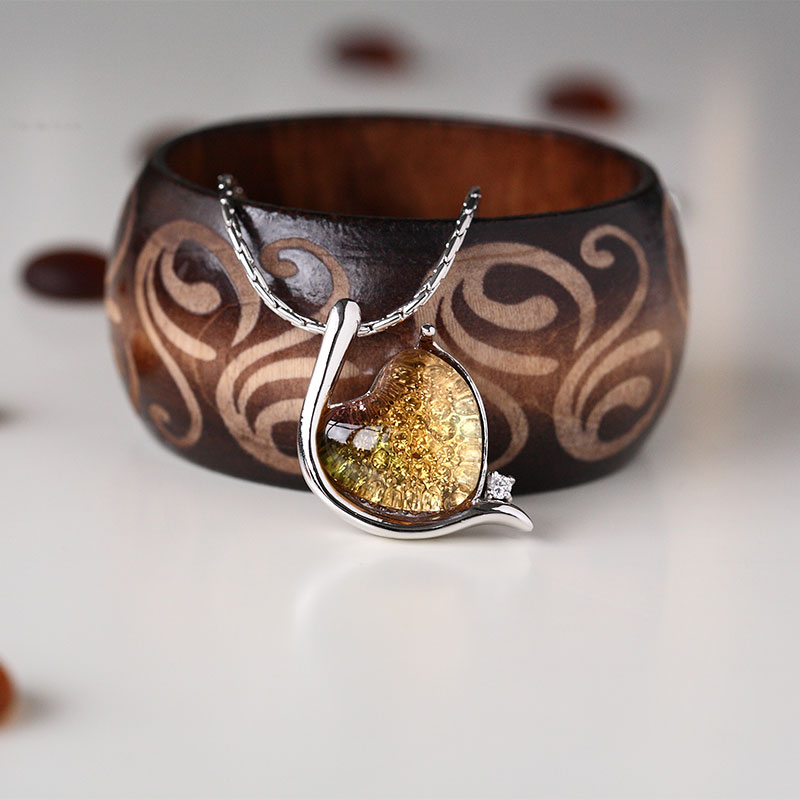 Silver-Tone Bracelet with Colored Glass PendantThis everyday bracelet pairs a silver-tone chain with a colored glass pendant, offering a jade-like look at a more accessible price. Its layered color and polished finish make it an easy choice for daily wear.View Product →
JM-ARTFAMILY's bracelet collection, for example, includes an elegant silver-color piece inlaid with a colored glass pendant, designed for everyday wear rather than special occasions only.
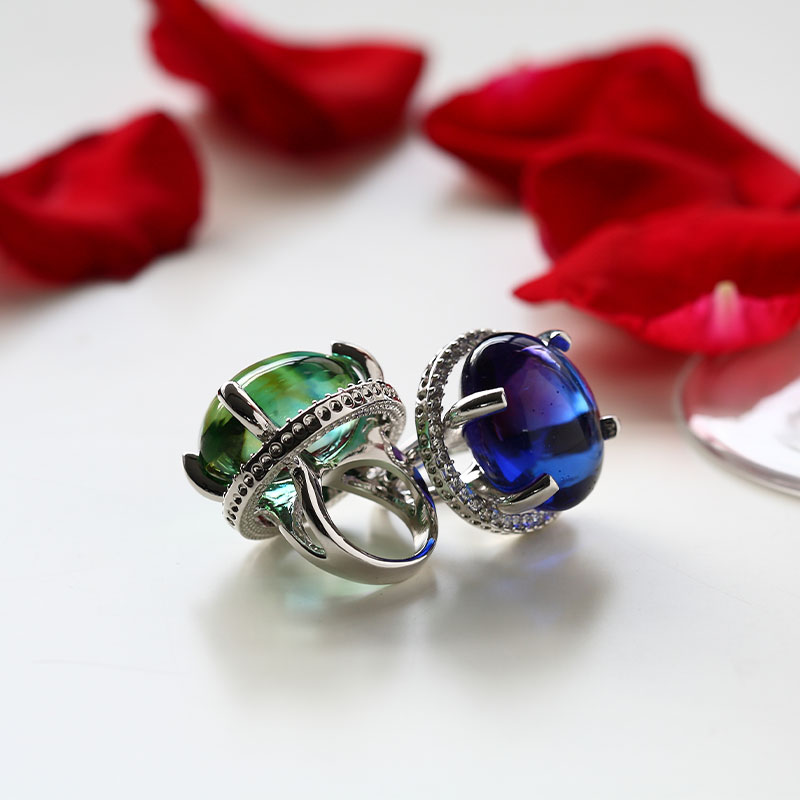 Transparent Blue-Green Oval Prong Glass RingA clear blue-green oval glass ring with a prong setting captures a cool, jadeite-like transparency. It complements the bracelet above and reflects the studio's skill in shaping smaller decorative pieces.View Product →
If you prefer a jade-like mineral tone, the transparent blue-green oval ring captures the cool transparency of high-grade jadeite and pairs naturally with a bracelet. The same studio techniques used for these small pieces also shape larger decorative works, as this overview of crystal decoration explains.
Caring for a Jade or Glass Bangle
Whether your bangle is natural jade or colored glass, the care routine is similar. Store it separately from metal jewelry so metal edges do not scratch the surface. Clean it with lukewarm water and a soft cloth, and avoid ultrasonic cleaners, harsh chemicals, and abrasive polishes. Take the bangle off before heavy physical work, sports, or gardening. For natural jade, also avoid prolonged direct sunlight and rapid temperature changes, which can dull the polish over the years.
Choosing a bangle eventually comes down to knowing what you value. Confirm the mineral type, check the treatment grade, examine the four quality factors under good light, and size it to your hand rather than your wrist. If natural jade stretches your budget, a carefully made colored crystal glass piece offers a similar aesthetic with honest color and far simpler upkeep. Buy from a source that describes its materials clearly, and you will enjoy the bangle for what it is rather than worrying about what it might really be.
 previous post