 中文繁体
中文繁体
 English
 Français

Amethyst Mala Guide: How to Choose, Use, and Care for Meditation Beads
Most amethyst malas look nearly identical in an online photo. Ten strands of violet beads, each around eight millimeters, each strung with a tassel at the end. The real differences show up only when the mala is in your hands. One strand has an even, deep glow as it catches light. Another looks flat, cloudy, or patchy from mixed bead quality. Choosing a mala for meditation, daily wear, or an altar comes down to understanding what you are actually buying. This guide walks through the decisions that matter, from natural stone quality to glass alternatives that deserve a closer look.
What an Amethyst Mala Is and Why Bead Quality Matters
A mala is a string of beads traditionally used in meditation to count breaths, mantras, or intentions. The classic format includes 108 counting beads, a larger guru bead, and often a tassel made from the cord's loose ends. Amethyst has become a widely chosen material because of its violet color and its longstanding association in crystal traditions with calm, focus, and spiritual awareness. But because the mala is handled constantly, quality is more than visual. Each bead's surface, its drill hole, the spacing between beads, and the cord all affect how the mala feels and how long it lasts.
A well-made mala should slide smoothly through your fingers without rough edges or wobbling beads. If the strand is natural amethyst, expect some variation in shade from bead to bead; that is a signature of genuine stone. What you do not want is a strand sorted carelessly, where pale beads sit next to very dark ones and make the necklace look unbalanced. Before buying, clarify whether you are looking at natural amethyst, treated stone, or glass, because all three appear in similar price ranges.
How to Evaluate Amethyst Mala Bead Quality
No single factor decides whether a mala is good. Three quick checks, followed by a close look at the bead material, cover the quality issues you will actually encounter.
Color Depth and Consistency
The finest amethyst has a saturated, rich violet with good transparency. Lower-cost strands are paler or contain cloudy zones. When you inspect a mala, spread the strand across a neutral surface and check the color transition bead by bead. Natural stone shows some variation, but it should feel harmonious rather than jarring.
Clarity and Surface Finish
Look for beads without large cracks or deep scratches. Small inclusions are normal in natural stone and do not weaken the bead unless they reach the surface. Run your fingers along the strand to feel for chips around the drill holes, a common flaw in mass production.
Drill Hole and Bead Shape
Beads should be uniformly round, with centers that line up when the strand is held vertically. Off-center holes make beads wobble and cause uneven wear on the cord. Check that holes are clean-edged, since rough holes can fray a silk cord over time.
| Bead material | Appearance | Hardness | Color stability | What to watch for |
|---|---|---|---|---|
| Natural amethyst | Violet with natural zoning and occasional inclusions | 7 on Mohs scale | Excellent | Shade differences between beads |
| Synthetic amethyst | Very uniform violet, clean and bright | 7 on Mohs scale | Excellent | Can look too perfect for some buyers |
| Dyed quartz or coated glass | Intense, uniform violet | 5.5 to 7 | Variable | Color may fade or look artificial |
| High-quality colored glass | Even violet, bright luster, no treatment | 5.5 to 6.5 | Excellent | Needs good annealing and polishing |
Practical Considerations Before You Buy
Bead Size and Feel
Malas are generally offered in 6 mm, 8 mm, or 10 mm beads. A 6 mm strand is light and quiet, easy to wrap twice around the wrist, and comfortable for all-day wear. The 8 mm size is the most common for meditation; it has enough mass to feel substantial while remaining easy to rotate. A 10 mm strand is heavier and more imposing, often chosen for home altars or for meditators who prefer a fuller grip. Wrap the mala around your hand before buying, because diameter and weight change how it feels in practice.
Cord, Knotting, and the Guru Bead
The cord carries the entire load. On quality malas, a braided silk cord is tied with a knot between every bead. Those knots stop beads from grinding against one another and keep the mala intact even if the cord breaks. Elastic cord is convenient for wrist malas but less durable for a full 108-bead necklace. The guru bead, which marks the completion point, should be noticeably different from the counting beads so your thumb finds it naturally during meditation.
How the Mala Will Be Used
If you plan to wear the mala outdoors, choose a material that handles sun, sweat, and occasional knocks. If it is used mainly for seated meditation, bead shape and knot spacing matter more than hardness. If it will sit on an altar as a decorative piece, color and proportion come first. For days when a full 108-bead necklace feels like too much, many practitioners switch to a wrist bracelet in the same aesthetic.
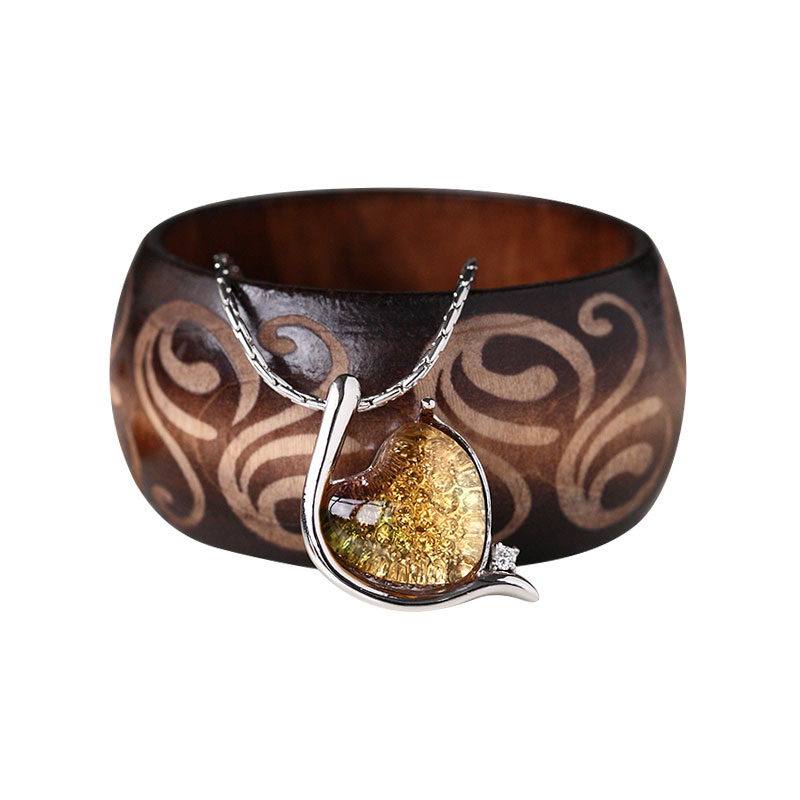 Colored Crystal Glass Bracelet with Alloy Inlay and Glass PendantThis bracelet combines alloy inlay with uniquely colored crystal glass, offering a durable and artistic option. Its controlled color production ensures consistent hue and resistance to fading, making it suitable for daily wear or meditation practice.View Product →
Why High-Quality Glass Beads Are a Strong Alternative
Many buyers assume that a proper amethyst mala must be cut from natural stone. In practice, quality glass beads deliver the same amethyst look with some real advantages. Because colored glass is formulated in controlled production, every bead in a strand can match in hue and saturation. There is no patchiness and no need for dye. The violet color runs through the entire bead, so it never fades or wears away. Glass is free of the internal fractures that can appear in natural amethyst after years of handling, and it is simpler to clean.
Glass craftsmanship has a long history in devotional and decorative objects. The same production discipline used to make sculptures, temple supplies, and altar glass applies to personal pieces. For a closer look at how colored crystal glass achieves its depth and brilliance, this guide to crystal decoration explains the techniques.
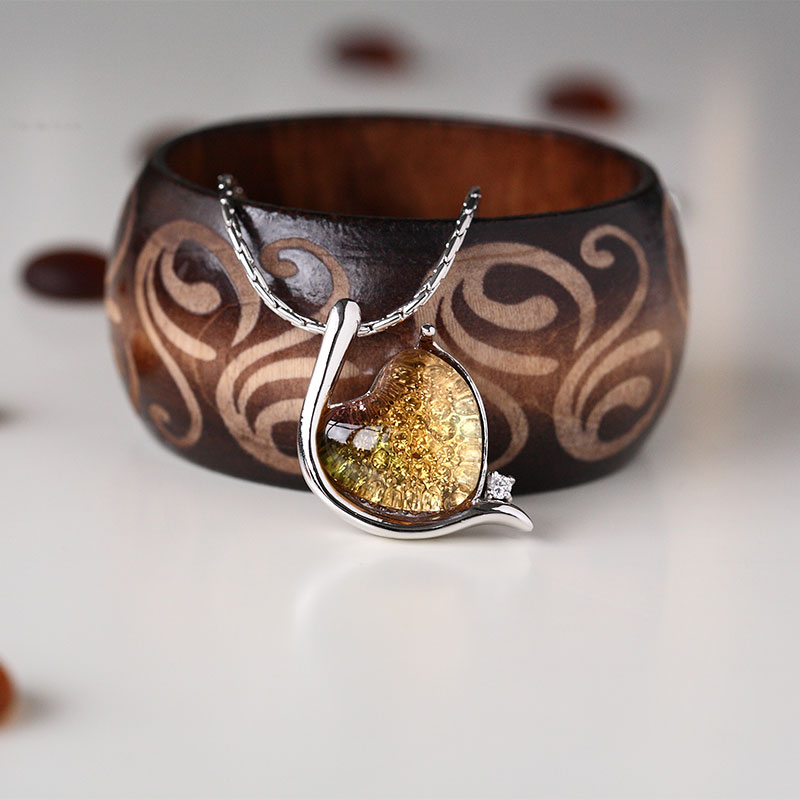 Elegant Silver Bracelet Featuring a Hand-Inlaid Glass PendantThis bracelet showcases a glass pendant crafted with the lost-wax technique, where internal bubbles create unique light refraction. It serves as a smaller, wearable format of the luminous quality discussed, ideal for those seeking elegance in a compact piece.View Product →
The material is not a compromise; it is a distinct option with predictable performance. A well-made glass bracelet with a pendant, for example, carries the same luminous quality in a smaller format.
Caring for an Amethyst Mala
Proper care extends the life of any mala, whether the beads are natural stone or glass. Store the mala in a soft pouch when it is not in use. Keep it away from prolonged direct sunlight; although natural amethyst is generally light-stable, some treated stones are not. Clean the beads with a slightly damp microfiber cloth and dry them immediately. Do not soak the cord, because silk deteriorates when wet. When the knots feel loose or the cord shows fraying, have the mala restrung before beads are lost.
For glass beads, avoid dropping them onto hard surfaces, since impact is the main way glass can chip. Properly annealed colored glass is durable in daily wear, but no glass object is indestructible. Treat the mala with the same respect you would give any crafted piece. The same care principles apply to other crystal glass objects in daily use, from tea sets to decorative bowls, where gentle handling and avoidance of thermal shock keep the surface bright. For practical detail, this guide to maintaining crystal glass utensils covers the everyday side of the subject.
Choosing What Works for Your Practice
An amethyst mala is a personal tool. Natural amethyst offers the appeal of stone formed over thousands of years, with subtle variations that make each strand unique. Glass offers consistent color, easy care, and a bright, glowing appearance that carries the amethyst aesthetic without pretending to be something else. Both are legitimate, and both have trade-offs.
If you want a single honest guideline, match the material to how you practice. For daily meditation and years of continuous handling, choose well-sorted natural amethyst or well-made glass, with solid knots and a comfortable bead size. For occasional wear or a decorative altar piece, let color and proportion be your guide.
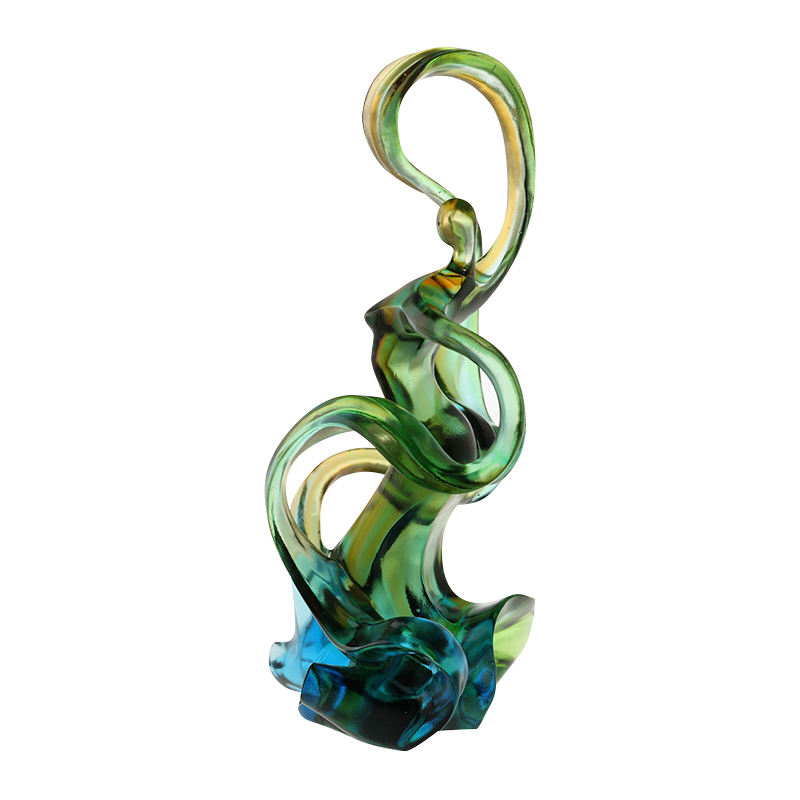
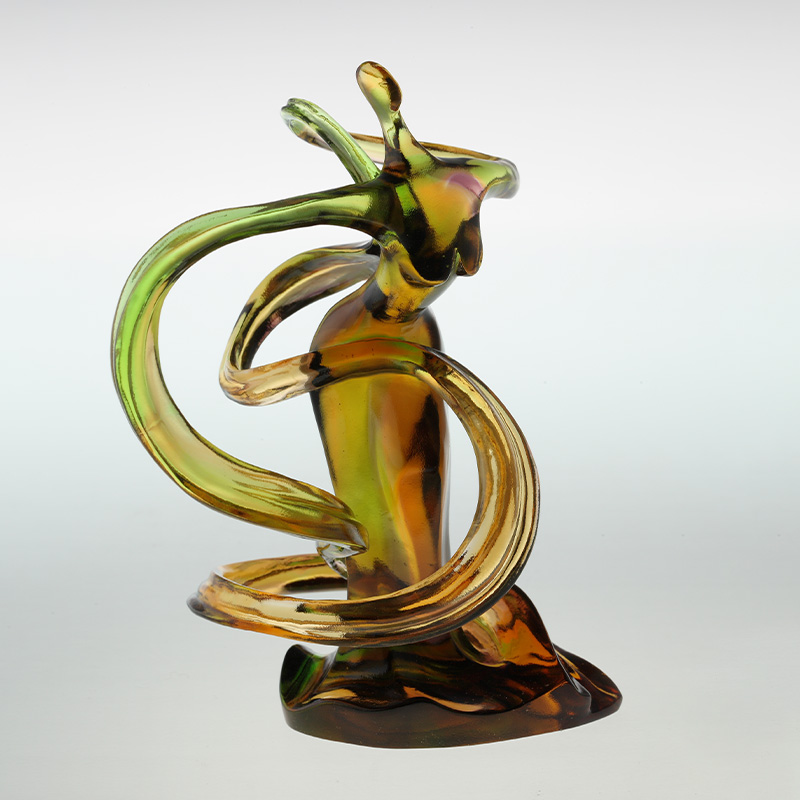 Spiritual Charm Colored Glaze Glass Figurine OrnamentThis small colored glaze sculpture features smooth, dynamic lines and natural color transitions in green, yellow, and brown. It represents spirituality and feminine softness, making it a meaningful addition to a meditation space or as a decorative altar piece.View Product →
A small sculpture placed near your meditation seat can anchor the intention you bring to the mala, turning a simple practice space into a more meaningful corner. Let the mala you choose feel right in your hand, because in the end it is the daily relationship with the beads that matters most.
 previous post