 中文繁体
中文繁体
 English
 Français

How to Display Crystal Glasses: Arrangement, Lighting & Styling Guide
Why Crystal Glass Deserves to Be on Display, Not in a Cabinet
Crystal glass is one of those materials that genuinely looks better when light passes through it than when it sits in darkness. The leaded or high-clarity glass that defines quality crystal has an optical density and refractive character that ordinary glass simply does not replicate — and that quality is entirely lost when the pieces are stored away in padded boxes or stacked behind opaque cabinet doors between uses.
There is also a practical argument. Crystal pieces that are displayed regularly get handled, noticed, and appreciated. Pieces that are stored tend to be forgotten until a special occasion — at which point they are pulled out, hastily rinsed, and often put back without ever being truly enjoyed. A well-considered display transforms crystal from occasional tableware into a permanent part of your home's visual character, where it contributes to the atmosphere of a room every single day.
The challenge is doing it well. Crystal is fragile, dust-attracting, and sensitive to direct sunlight in ways that make careless display counterproductive. The following guide covers everything that goes into a display arrangement that is both beautiful and practical over the long term.
Choosing the Right Location for Your Crystal Display
Location sets the foundation for everything else. A display that is well-arranged but poorly placed will always underperform, regardless of how carefully the individual pieces are selected or positioned.
Light access is the primary consideration. Crystal glass interacts with light in ways that no other material does — it refracts, scatters, and occasionally throws small rainbows across surrounding surfaces. A display location that receives either good natural sidelight or well-positioned artificial illumination will make the same pieces look dramatically more alive than a location that is dim or receives only overhead light from directly above. Sidelight and angled light from below are particularly effective at activating the refractive properties of cut crystal.
At the same time, direct sunlight is a risk for prolonged exposure. Most crystal glass is stable in sunlight, but certain colored crystal pieces can experience gradual fading over years of direct UV exposure. More practically, direct sunlight creates intense, unpredictable glare rather than the soft sparkle that makes crystal displays attractive. A location that receives indirect natural light — near a window but not in its direct path — offers the best of both conditions.
Visibility and traffic flow are the next factors. The display should be positioned where it can be seen and appreciated from the main viewing angles of the room — typically from seated positions in a living room, or from the dining table if the display is in a dining space. Equally important is ensuring the location is away from high-traffic pathways where accidental contact is likely. Crystal does not need to be untouchable, but it should not be placed where it will be regularly brushed past.
Stability of the display surface matters more than it might seem. Shelves that flex under load, cabinets on uneven floors, or wall-mounted units without proper anchoring all create vibration risk. Crystal pieces — particularly stemware with thin stems — are vulnerable to vibration-induced movement and contact. Any display structure should be genuinely stable before pieces are placed on it.
Display Methods: Open Shelves, Cabinets, and Curio Cases
The three most practical display formats for crystal glass each have distinct trade-offs between visibility, protection, and aesthetic flexibility.
Open shelving offers maximum visual impact and the easiest access to individual pieces. Crystal placed on open shelves catches ambient light from all angles, and the display integrates naturally with the surrounding room without visual barriers. The trade-off is dust accumulation — open-shelf crystal requires more frequent cleaning than enclosed pieces, and in busy households, the exposure to accidental contact is higher. Open shelving works best in low-traffic rooms and for collections that are rotated or used regularly enough that dust buildup is not an issue.
Glass-fronted cabinets are the most practical long-term solution for valuable or fragile collections. The transparent front preserves full visibility while dramatically reducing dust accumulation, and the enclosed environment protects pieces from accidental contact. A glass-fronted cabinet with interior lighting transforms into a dedicated display case that frames the collection as intentional rather than incidental. For larger collections, a china cabinet or display hutch with adjustable shelves offers the flexibility to accommodate different piece heights and groupings.
Curio and display cases — typically freestanding glass-paneled units with multiple shelves — offer a middle ground between the openness of shelving and the enclosure of cabinets. They are particularly suited to mixed collections that include both functional glassware and decorative pieces, allowing the display to be viewed from multiple angles without full exposure to the environment. Mirrored backs, which are a common feature in quality curio cases, amplify the apparent depth of the collection and add an additional dimension of light reflection that suits crystal especially well.
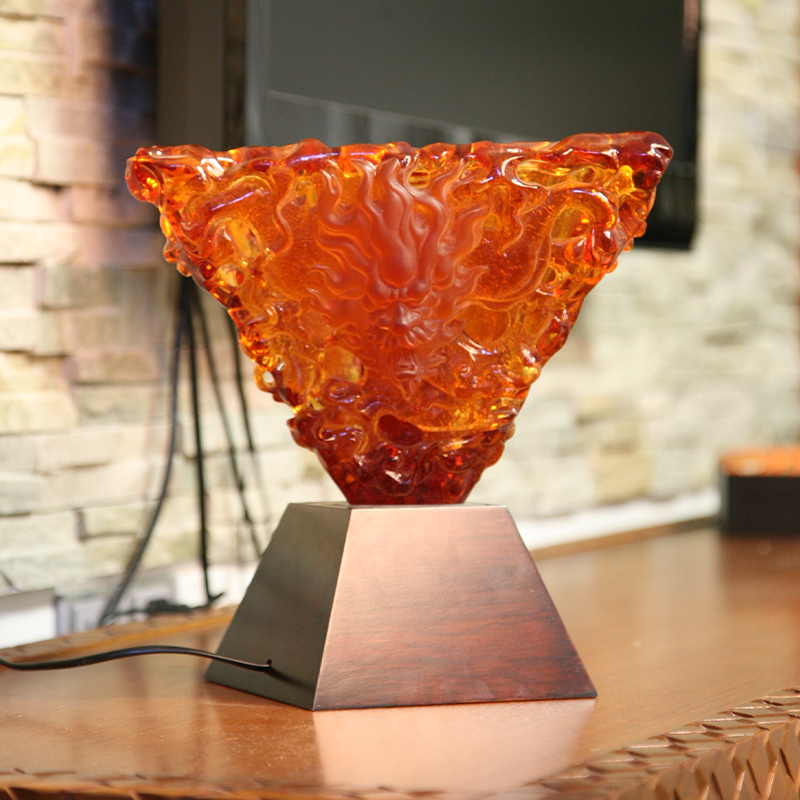
Lighting: The Secret to Making Crystal Glass Sparkle
No single factor has more impact on how a crystal display looks than lighting. The same collection of pieces can appear flat and ordinary under poor lighting or genuinely breathtaking under well-positioned light. Understanding how to light crystal effectively is the most transferable skill in display design.
Directional light is more effective than ambient light. A soft overhead glow illuminates a room; a focused directed light source activates the refractive properties of crystal. Small LED spotlights or picture lights positioned above or at the side of a display shelf cast light at an angle that enters the glass, bounces between internal facets, and exits in dispersed directions — producing the characteristic sparkle that makes crystal visually arresting. Cabinet-mounted LED strip lights positioned at the top of each shelf are a practical and effective solution for enclosed displays.
Warm light temperature — around 2700K to 3000K — tends to complement crystal glass more than cool white light. Cool light can make clear crystal appear slightly blue-grey, while warm light brings out the depth and warmth in the material. For colored crystal pieces, the interaction between light temperature and glass color produces results worth testing before committing to a fixed installation.
Crystal lighting fixtures in the same room as a crystal display create a cohesive design language that amplifies the effect of both. When the surrounding space already incorporates crystal glass in its light fittings, a crystal glassware or ornament display reads as a deliberate design choice rather than a collection placed somewhere convenient. Crystal lighting fixtures designed to complement decorative crystal glass create exactly this kind of visual continuity — the display and the environment reinforce each other rather than competing.
If hardwired lighting installation is not an option, battery-powered LED puck lights placed inside a cabinet or on a shelf behind the display are a low-commitment alternative that still produce a meaningful improvement over unlit arrangements.
How to Arrange Crystal Glasses: Height, Grouping, and Layering
The arrangement of pieces within a display is where visual interest is created or lost. A technically well-lit display on a quality shelf will still look flat if the arrangement lacks structure and variation. A few principles applied consistently produce results that look considered and intentional without requiring a professional eye.
Vary height deliberately. A row of identically sized glasses at the same height creates a flat visual line with no foreground or background. Mixing heights — placing taller pieces toward the back or center and shorter pieces toward the front or edges — creates depth and draws the eye across the arrangement rather than along a single horizontal plane. This is particularly important for stemware displays, where the range from a tall wine glass to a shorter tumbler or decanter already provides a natural height variation to work with.
Use the rule of odd numbers. Groups of three, five, or seven pieces are visually more dynamic than even-numbered pairs or symmetrical arrangements. This is a principle borrowed from interior design and floral arrangement that translates directly to glassware display — an odd-numbered grouping encourages the eye to move around the arrangement rather than settling on a static midpoint.
Create foreground and background layers. On a deep shelf, place larger or taller pieces toward the back and smaller or more detailed pieces toward the front. This layering creates the impression of visual depth and allows smaller pieces — which might be lost in a flat arrangement — to register clearly in the foreground. A quality crystal glass wine set arranged this way — with a decanter as the backdrop and stemware of varying heights in the foreground — produces a display that looks composed rather than collected.
Leave breathing room. The instinct with a collection is to fill available space, but overcrowding a shelf eliminates the negative space that allows individual pieces to read clearly. Each piece should have enough space around it that its silhouette is legible from the main viewing distance. A less densely populated shelf that shows each piece clearly will always look more intentional than a fully packed arrangement where individual pieces blur together.
Beyond Stemware: Mixing in Vases, Figurines, and Ornaments
The most visually interesting crystal displays are rarely composed of a single category of object. Mixing crystal glassware with crystal decorative pieces — vases, figurines, and sculptural ornaments — creates a layered display that reads as a curated collection rather than a shelf of matching glasses.
The key to successful mixing is maintaining a consistent material thread. When everything shares the quality of optical clarity and light interaction that defines good crystal glass, pieces from very different categories coexist naturally. A crystal vase placed among wine glasses does not look out of place; it looks intentional, because both objects share the same fundamental visual language of transparency and refracted light.
Crystal glass vases are particularly versatile display companions for stemware. Their scale — typically taller and broader than most glasses — provides natural height anchoring for an arrangement, and their open-topped form creates an opportunity for seasonal variation: fresh flowers in spring, dried botanicals in autumn, or left empty in winter to let the glass itself be the focus. Crystal glass vases in clear or lightly tinted glass bridge the functional and decorative naturally.
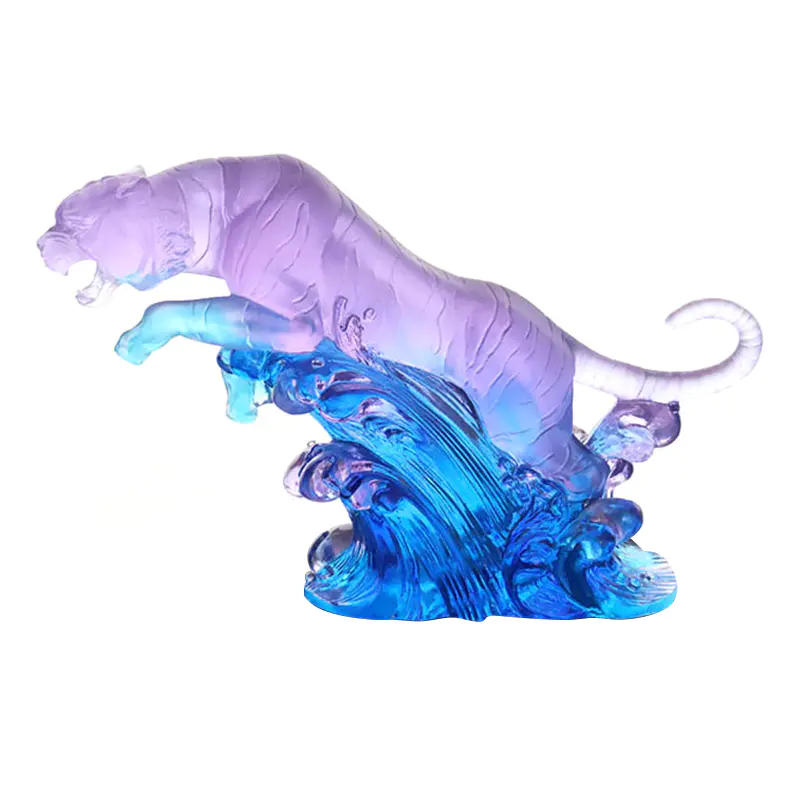
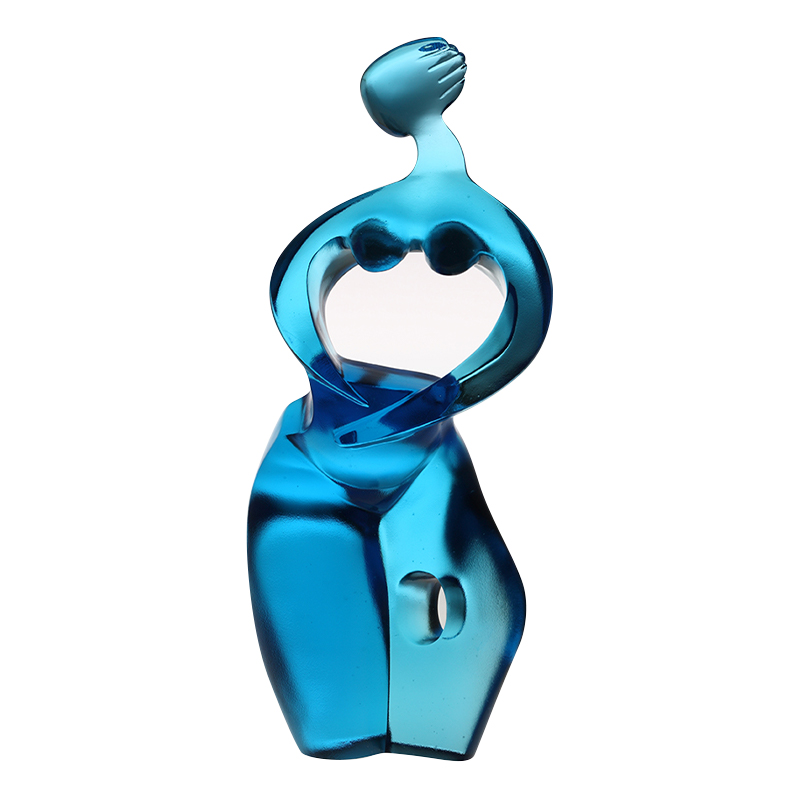
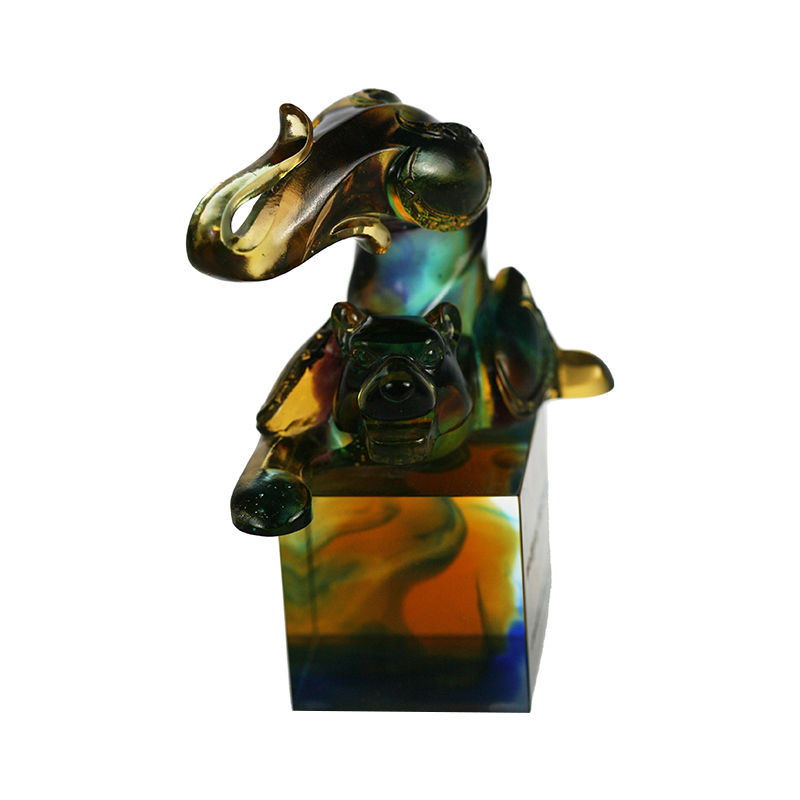
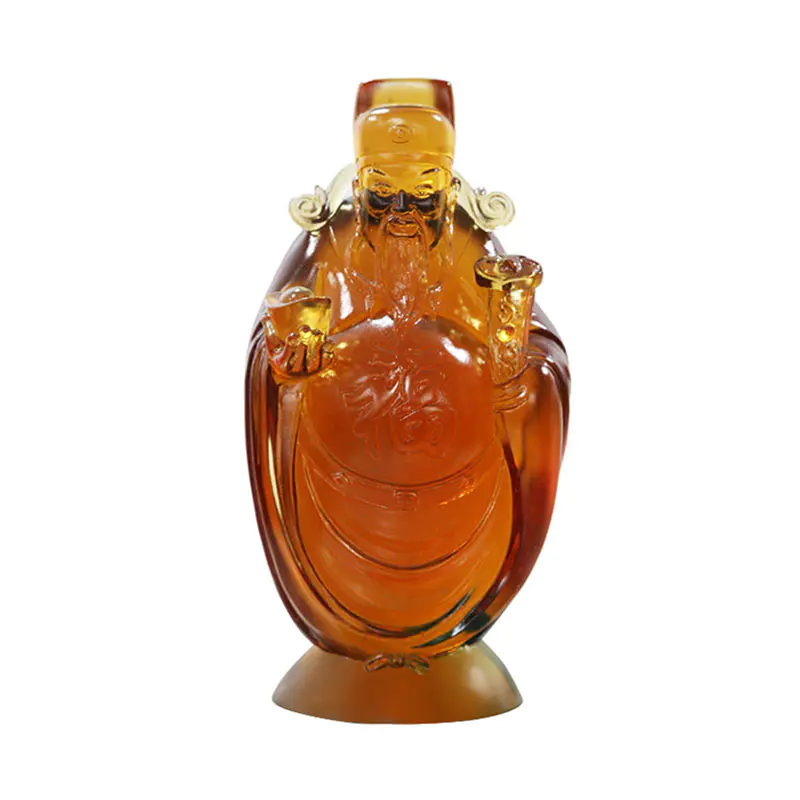
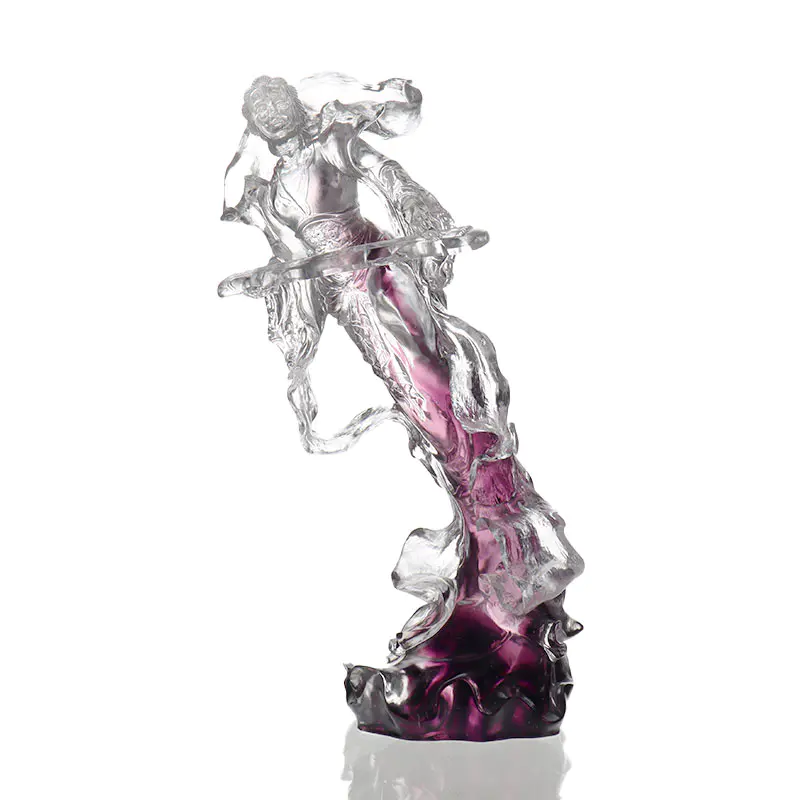
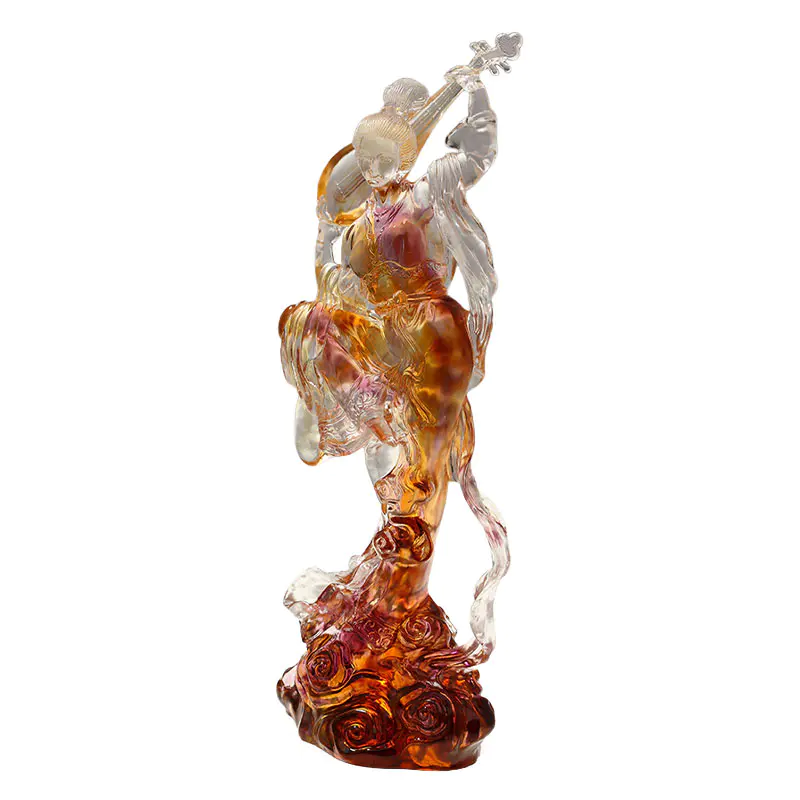
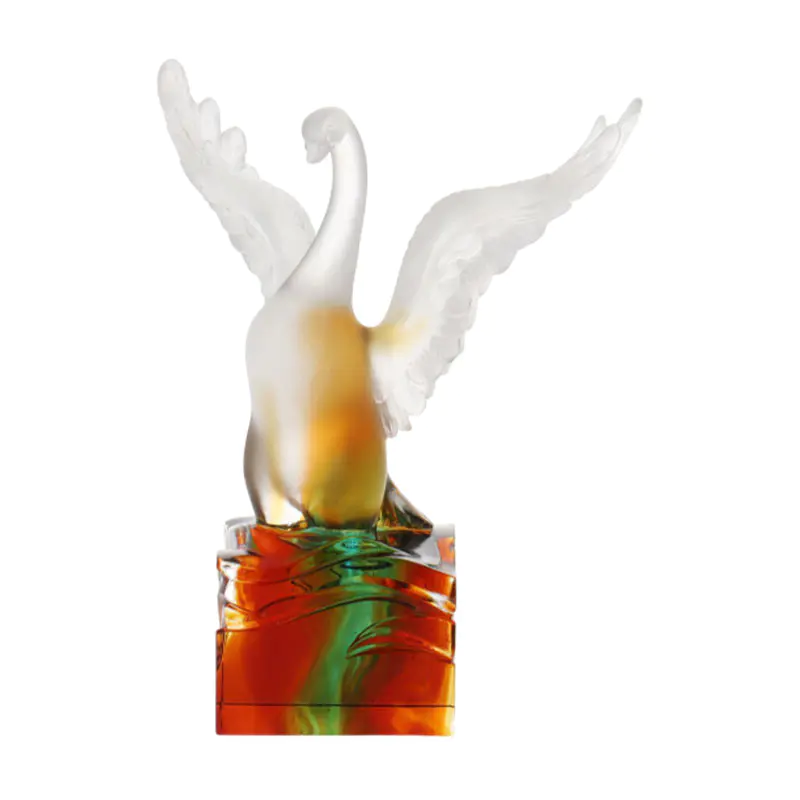
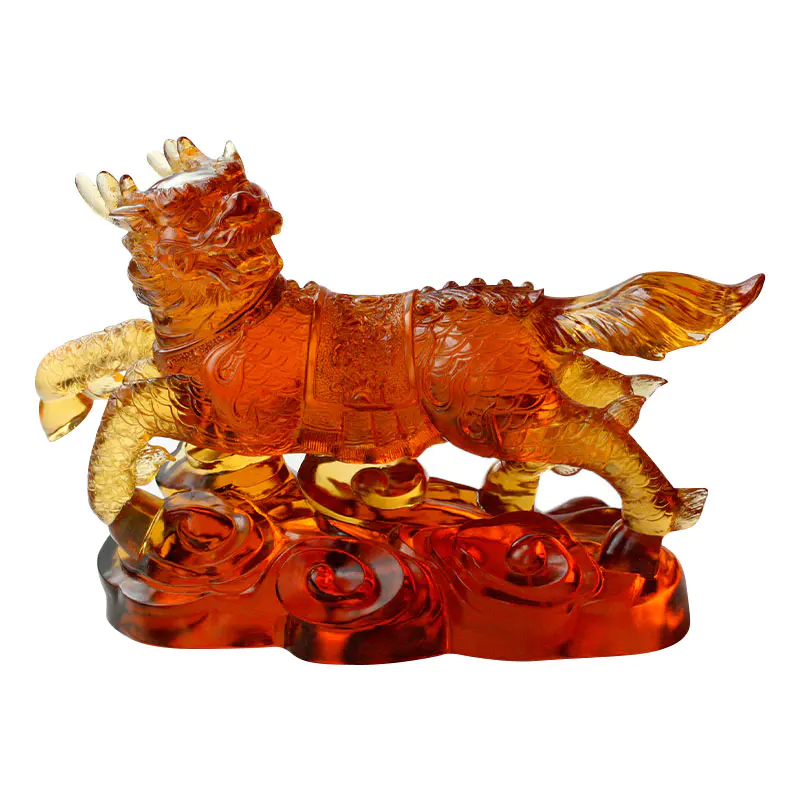
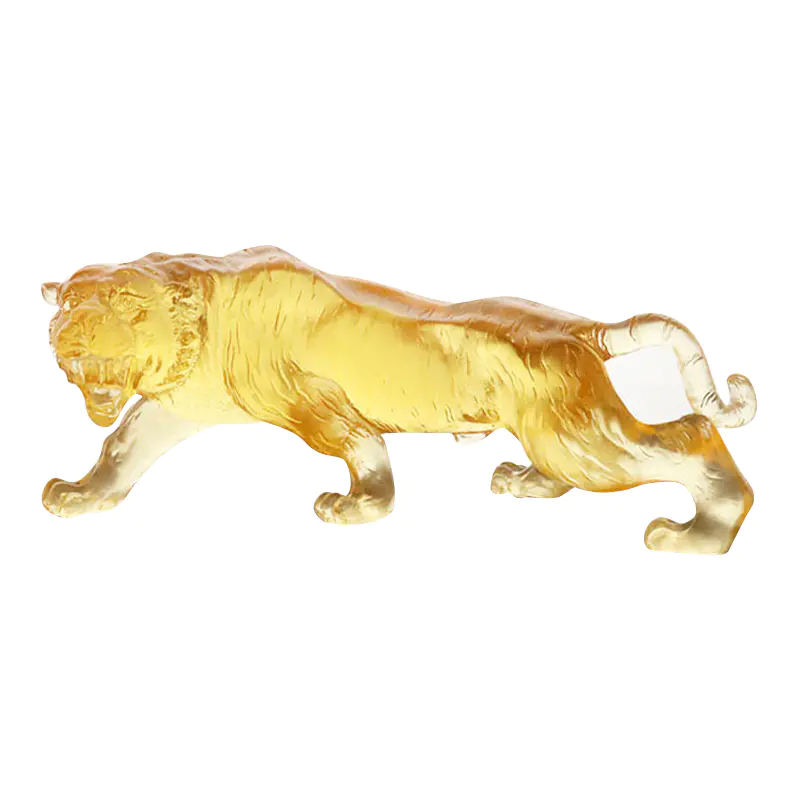
Figurines and sculptural ornaments introduce a narrative and representational element that purely functional glassware lacks. A figurative piece — a human form, a bird, an abstract sculpture — gives the eye a focal point within a display and adds conceptual variety to what might otherwise be a uniform collection of vessel forms. Figure crystal glass figurines and ornaments placed among glassware create a display with visual storytelling rather than mere accumulation. Similarly, animal crystal glass figurines introduce movement and character — the implied posture and personality of an animal form adds life to a still arrangement in a way that geometric or vessel forms alone cannot.
When mixing categories, position figurines and ornamental pieces at eye level or in the foreground where their detail can be appreciated up close. Vases and taller pieces work best as background anchors. Stemware — which has its own sculptural quality in the curve of a bowl and the line of a stem — bridges between the two categories naturally.
Styling Your Crystal Display by Interior Aesthetic
The display format that works best is partly determined by the visual language of the surrounding room. Crystal glass is flexible enough to suit very different interior styles, but the arrangement approach — the choice of companion pieces, the density of the display, the color palette — should respond to the existing aesthetic rather than compete with it.
In traditional and classic interiors, crystal glass is in its native environment. A formal china cabinet with glass panels, interior lighting, and a mirrored back suits this setting perfectly. Arrange pieces symmetrically, group by type, and use a mix of clear and subtly colored crystal to add visual warmth. Formal crystal decanters, tall wine glasses, and figurative ornaments all coexist naturally in this context.
In contemporary and minimalist interiors, restraint is the operative principle. A smaller, carefully edited selection of pieces on a floating wall shelf makes a stronger statement than a fully stocked cabinet. Choose clear crystal with clean lines over heavily cut or colored pieces. Limit the arrangement to three to five objects maximum, leave generous negative space, and let the optical quality of the glass speak without competition from surrounding clutter.
In eclectic and maximalist spaces, crystal glass becomes one element in a layered visual environment. Here, mixing crystal with non-crystal materials — ceramics, metals, natural objects — can work well as long as the crystal pieces remain legible as a coherent group within the larger arrangement. Colored crystal pieces, sculptural ornaments, and figurines with more dramatic forms suit this context well, where visual boldness reads as intentional rather than distracting.
Cleaning and Maintenance: Keeping the Sparkle Alive
A crystal display that is not maintained loses its primary appeal quickly. Dust accumulation on crystal surfaces reduces light transmission and scatters light diffusely rather than refractively, dulling the sparkle that makes crystal worth displaying in the first place. Consistent, gentle maintenance is what keeps a display looking as good in year three as it did on day one.
Dust open-shelf displays weekly using a clean, dry microfiber cloth. Work from the top of each piece downward, and handle stemware by the base or the body — never by the stem alone, which is the most structurally vulnerable point. For pieces with cut or engraved surfaces where dust settles into recesses, a soft natural-bristle brush (a clean makeup brush works well) reaches into the detailing without scratching the surface.
Wash crystal glass by hand when a more thorough clean is needed. Use warm — not hot — water and a small amount of mild dish soap. Hot water can stress the glass through thermal shock, and harsh detergents can leave a residue that clouds the surface over time. Rinse thoroughly with clean warm water and allow to air dry upside down on a lint-free cloth, or dry immediately with a clean linen cloth to prevent water spotting.
Avoid dishwashers for quality crystal. The combination of high heat, alkaline detergent, and mechanical vibration from a dishwasher cycle will gradually etch and cloud the surface of crystal glass, permanently reducing its clarity and optical quality. This applies equally to crystal ornaments and figurines — hand cleaning only.
Rotate pieces seasonally to distribute exposure evenly and keep the display feeling fresh. Even a small rearrangement — swapping foreground and background pieces, introducing a new object, removing one that has been in the same position for months — refreshes the visual impact of the display and gives you a regular opportunity to inspect each piece for chips, cloudiness, or wear that is easier to address early than after extended neglect.
 previous post