 中文繁体
 English
 Français

Buddha Meditating Statue Buying Guide: Glass, Scale, Placement, and Care
Three details decide whether a meditating Buddha statue feels calm or crowded: the sightline from the door, the depth of the shelf or plinth, and the way light lands on the face and hands. For a quiet interior, a glass or colored-glaze figure often works best because it holds light without becoming a mirror. For daily practice, a stable base and a clear mudra matter more than the overall size. The practical sequence is to settle the room, read the posture, then choose the material and scale that fit the place where the figure will live.
Start with the room and the sightline
A meditating figure is usually viewed from a seated position, so the first measurement is eye level, not floor space. On a low cabinet in a meditation corner, the statue’s face should sit near or slightly above the viewer’s eyes when seated. On a temple altar, the figure needs to remain visible from the main standing or bowing position and must not be crowded by candles, offerings, or flower vases. In a reception room or studio, a side table with a plain wall behind it often reads better than a crowded shelf.
Leave breathing room around the silhouette. A useful rule is to keep at least one hand-width of clear space on each side and enough depth behind the figure for cleaning. If the statue sits in a niche, check the clearance above the head and the height of the opening before ordering; a few centimeters can be the difference between a graceful focal point and an object that looks wedged into place. Also confirm what the base will rest on. Glass is dense, and a small footprint can concentrate weight on a thin shelf.
Read the posture and hand gesture before comparing prices
The classic meditating Buddha sits with legs crossed, spine upright, shoulders relaxed, and hands in the lap. In dhyana mudra, the palms face upward, the right hand rests over the left, and the thumbs meet lightly. The eyes are usually lowered or closed. Those cues matter because they tell you whether the figure is intended for contemplation, formal devotion, or decorative calm.
Iconography goes beyond the seated pose. Amitabha Buddha is often shown in a meditative posture and may carry a lotus or a specific hand position; Amitayus Buddha is associated with long life and may hold a vase or have a distinct crown; Medicine Buddha may carry a bowl or medicine jar. If the statue is for a temple, memorial hall, or family altar, confirm the intended figure with the people who will use it. A beautiful glass face cannot compensate for the wrong iconography.
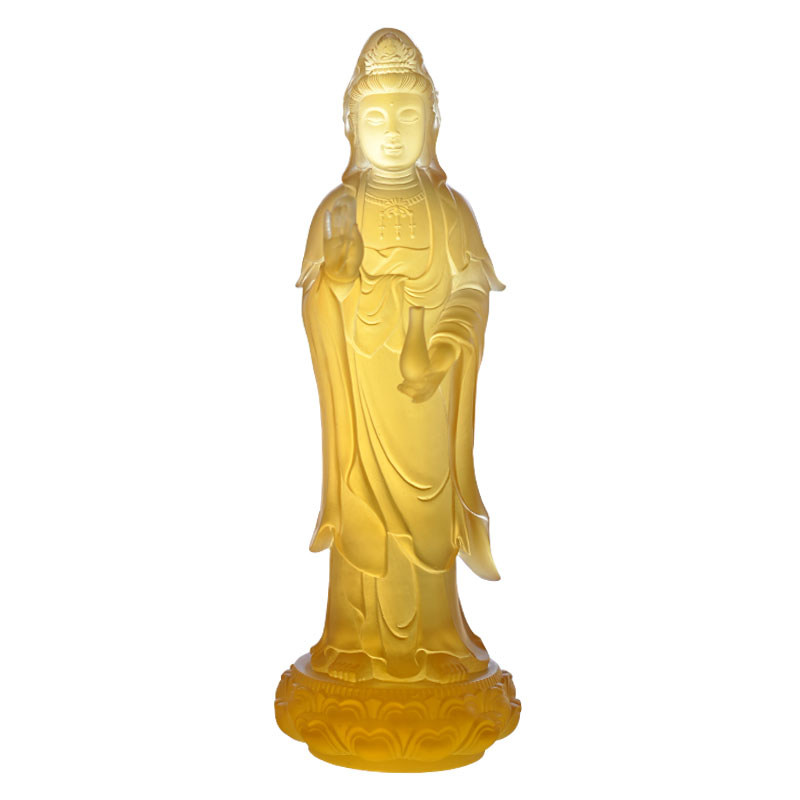
For a devotional focal point, the Amitabha Buddha crystal statue is one option in our Buddhist range.
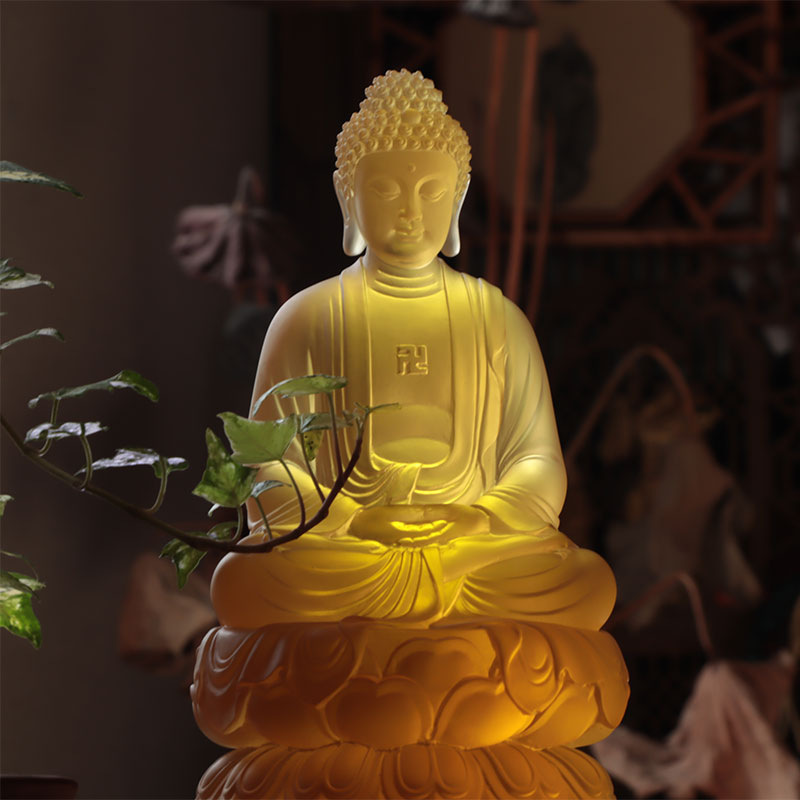 Amitabha Buddha Crystal Statue for Devotional FocusA glass/crystal Amitabha Buddha sculpture for a devotional focal point; customizable, with hand gestures and attributes worth checking in product images.View Product →
Check the hands and any attributes in the product images, not only the face. A small change in the gesture can shift the reading of the figure from a generic seated Buddha to a specific devotional form.
Glass, crystal, and colored glaze in real light
Material changes the reading of a statue more than a catalog photo suggests. Transparent crystal glass sends light through the shoulders and lap, which can make the figure feel lighter but can also show fingerprints and dust. Colored glaze, often called liuli in this context, gives depth and a controlled color range; it hides small handling marks better than clear glass but can look darker in a low-lit corner. Frosted or textured glass softens reflections and is more forgiving in rooms with strong windows.
| Finish | Visual effect | Handling notes | Good fit |
|---|---|---|---|
| Clear crystal glass | Bright highlights; face and hands stay legible under low light | Shows fingerprints; dust carefully; avoid strong backlight that creates glare | Altar with controlled lighting; display cabinet |
| Colored glaze or liuli | Deep color; softer internal reflections; stronger silhouette | Check color consistency under neutral light; avoid abrasive cleaners | Home altar, studio, gift display |
| Frosted or textured glass | Diffused highlights; gentle outline; less sparkle | Texture can trap dust; use a soft brush | Bright rooms, niches, quiet corners |
Ask for photographs under both daylight and warm interior light. A deep amber or blue glaze can look rich in one setting and nearly black in another. For a long-life figure in a memorial or blessing setting, the Amitayus Buddha crystal statue is a natural candidate.
 Amitayus Buddha Crystal Statue in Colored GlazeA colored-glaze crystal Amitayus Buddha statue combining religious symbolism with detailed carving; ask for daylight and warm-light photos before choosing.View Product →
Scale, weight, and the base
A 20–30 cm figure suits a home altar or shelf; a 40–60 cm figure can hold a small shrine room or reception area; larger pieces should be specified with the plinth and installation method. Do not choose by height alone. The base diameter, total weight, and center of balance determine whether the statue can be lifted and cleaned safely.
- Measure the opening of the niche or cabinet, then subtract 20–30 mm from the height for clearance.
- Check the shelf load and the thickness of the top; glass figures can be dense for their size.
- Ask for the actual weight and whether the base is solid or hollow.
- Plan the lift: clear a padded surface at the same height as the final position before unpacking.
- Use felt or silicone pads under the base to protect both surfaces.
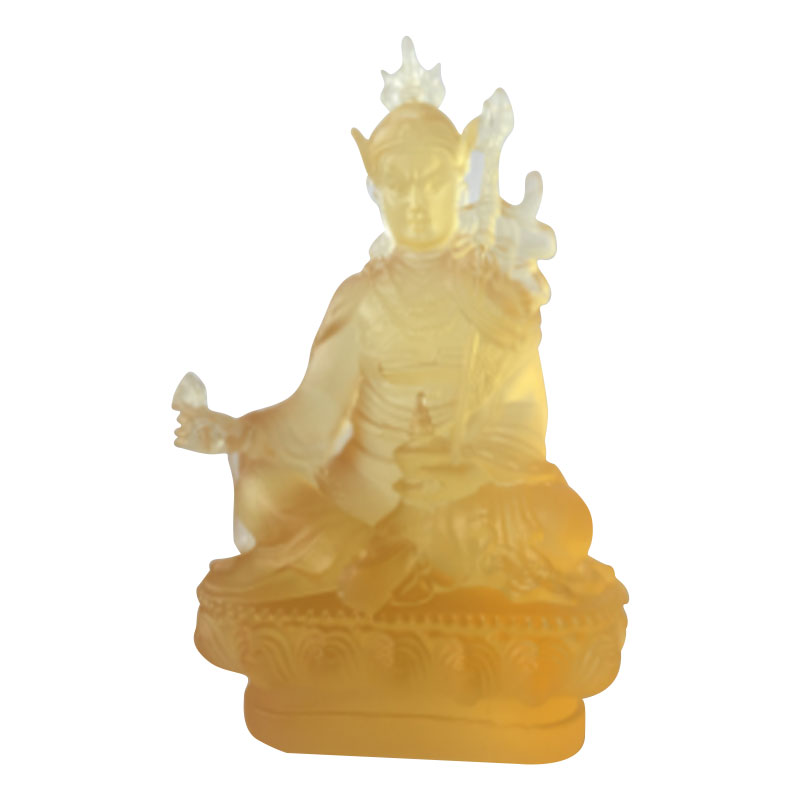
For a healing-focused figure, the colorful liuli crystal Medicine Buddha statue is one option.
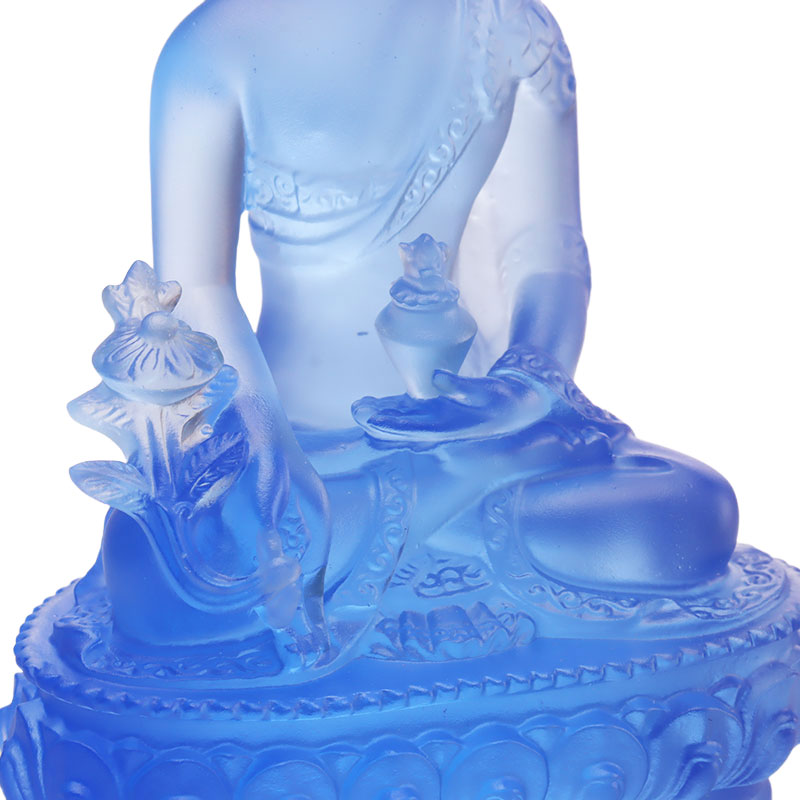 Colorful Liuli Crystal Medicine Buddha StatueA colored Liuli Medicine Buddha sculpture with medicine bowl and Dharma seal, suited to worship, decoration, or collection and requiring gentle glass care.View Product →
Care that protects the finish
Dust is the main enemy of a glass statue because it dulls the face and hands first. Use a soft brush or microfiber cloth and work from top to bottom. Do not spray cleaner directly on the figure; apply a small amount to the cloth only if the maker approves it. Avoid ammonia, abrasives, and rough paper towels on coated or frosted surfaces. Lift the statue by the base, never by the head, hands, or any thin attribute. Keep the piece away from direct heat, radiators, and prolonged strong sunlight, which can stress adhesives or coatings over time.
If the display uses a backlight, choose low-heat LED and keep the light source away from the glass surface. For a deeper look at glass sculpture techniques and collecting, see this guide to art glass sculptures. The same handling discipline applies whether the statue is a small shelf piece or a temple-scale figure.
Buying for a temple, studio, or gift
The purchase context changes the questions. A temple buyer needs iconographic accuracy, a stable plinth, and a packing method that protects the figure in transit. A designer needs front, side, and rear views under neutral light, plus dimensions that include the base. A gift buyer needs a presentation box and a simple care note. In every case, ask for the actual piece or a representative sample, not only a catalog render.
For international orders, confirm the packing material, inner support, and replacement terms for transit damage before the statue ships. If the figure will be installed in a public space, agree on the fixing method and who will handle the lift. At JM-ARTFAMILY, the Buddhist glass range includes figures, altar offerings, decorative bricks, and niches, which makes it possible to coordinate a statue with the surrounding display rather than treating it as a single object.
A meditating Buddha statue works best when the room, posture, material, and scale agree. Start with the sightline, confirm the figure’s identity, then choose a glass finish that suits the light and the care you can realistically provide. When those decisions are made in that order, the statue becomes a quiet focal point rather than a fragile ornament that is difficult to place.
 previous post