 中文繁体
 English
 Français

Buddha Gold Pendant Buying Guide: Metals, Meanings, Sizing, and Craft Checks
Two pendants sit on the same tray at almost the same price. One carries an 18K stamp on the bail; the other says "gold finish" on its card. After two years of daily wear, one still looks like the piece you bought, while the other shows a pale rim where the plating has thinned against a collarbone. That single detail, what the gold actually is, matters more than the height of the Buddha figure or the length of the chain, so it belongs at the top of the checklist.
A sensible order of decisions looks like this: metal first, figure second, size and bail third, surface detail last. Everything after that is maintenance and how the pendant sits alongside pieces you already own.
Start With the Metal, Not the Figure
"Gold" covers at least six different constructions, and the price gap between them is usually wider than the gap between two similarly sized pendants in the same category. The comparison below is the one worth making before you look at faces or chains.
| Construction | Gold content | How it wears | Price band | Suits |
|---|---|---|---|---|
| 24K (999) gold | About 99.9% | Very soft; fine detail rounds off and edges dent | Highest | Heirloom and display pieces |
| 18K (750) gold | 75% | Firm enough for daily use; holds facial detail | High | Detailed faces and fine robes |
| 14K (585) gold | 58.5% | Harder surface, paler tone, fewer scratches | Mid to high | Daily wear and active wearers |
| Gold vermeil | Typically 2.5 microns of gold over sterling silver | Edges and bail can thin within one to three years | Mid | Larger pendants on a budget |
| Gold-filled or rolled gold | Roughly 5% gold by weight, bonded by heat and pressure | Outlasts plating by years; still wears at sharp corners | Mid | Everyday pendants |
| Gold-toned glaze or crystal glass | None | Colour is fired in and will not flake, but glass can chip | Low to mid | Colour-matched sets and layering |
A stamp is not proof on its own. Look for a clear mark on the bail or back plate, plus a fineness number such as 750 or 585 rather than a word alone.
Which Buddha Figure Suits Which Purpose
Once the metal is settled, the figure becomes a question about intent rather than taste. A few common choices:
- Shakyamuni, the historical Buddha, often seated with the right hand touching the earth: the most neutral option and the easiest to wear with anything.
- Amitabha, hands in the meditation gesture: symmetrical, calm, and frequently chosen as a remembrance gift.
- Medicine Buddha, usually holding a bowl or a myrobalan plant: painted deep blue in tradition, but often rendered in gold for pendants, and chosen for health-related gifting.
- Guanyin, the bodhisattva of compassion: common in smaller women's pendants and children's pieces.
- Maitreya or the laughing Buddha: informal and auspicious, better suited to casual chains than formal wear.
- Ksitigarbha: a memorial figure that reads as devotional rather than decorative, which suits some occasions and not others.
At pendant scale, one figure always reads more clearly than a crowded group. Below about 20 mm in height, facial features dissolve into a suggestion, which is fine for a silhouette piece and disappointing if you wanted an expression you can actually see.
Size, Bail and Chain: The Fit Problems Buyers Notice Later
Most returns on Buddha pendants come from fit rather than design. Three numbers decide whether a piece works in practice.
- Height and thickness: 18 to 30 mm is the practical range at the collarbone. Anything above 35 mm needs a heavier chain and swings outward when you lean forward.
- Bail opening: an inner diameter under 3.5 mm will not take a 2 mm chain comfortably, and a bail that grips too tightly stops the pendant from turning to face front.
- Total weight: a 2 mm cable chain carries roughly 8 to 10 g comfortably, and a solid 25 mm gold pendant can approach that limit on its own.
One more test before you commit: hold the piece at the bail and let it hang. A well-balanced pendant settles with the face upright; a badly placed bail makes the figure lean to one side, and no chain will correct it.
Crystal and Glazed Glass as a Gold Alternative
Gold is not the only route to warmth and depth. Fired glass and coloured glaze can hold a gold tone permanently, because the colour sits inside the material rather than on top of it. Pendants made this way weigh less than metal at the same size and can carry hues that gold alloys cannot reproduce, from amber to deep blue-green.
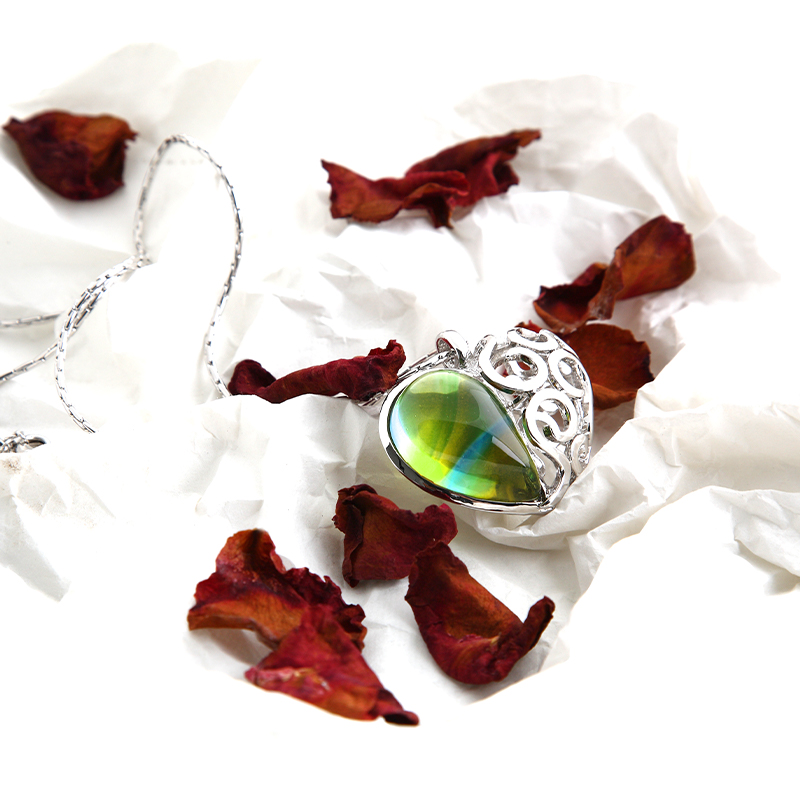 Silver-Coloured Necklace with Gradient Glass PendantA glass pendant necklace with gradient colour and patterned silver-coloured mounting, offering a lighter, colourful alternative to metal pendants for romantic everyday wear.View Product →
The trade-off is different in character: glass is brittle at the bail and chips at thin edges, so a glass pendant wants a bezel or a drilled-and-capped mounting rather than a glued loop. Coloured glaze on crystal also varies slightly from piece to piece, which is part of the appeal and the reason two units are never identical. The same behaviour of light inside crystal that shapes large decorative pieces is what gives a glass pendant its depth at 25 mm.
Two-Minute Craft Checks
- Face symmetry: eyes, forehead mark and ear lines should mirror within a millimetre, judged at arm's length rather than close up.
- Bail joint: look for a solder line or visible seam where the loop meets the head or shoulders.
- Glaze pooling: colour should sit evenly in recesses without trapped bubbles.
- Plating figure: for vermeil, ask for the micron thickness in writing. Under 2.5 microns over silver is plating, whatever the label says.
- Hallmark: a fineness number plus a maker's mark, not a sticker.
- Weight in the hand: a hollow pendant feels light for its size and dents far more easily.
When the Pendant Is Only One Piece
Buyers planning a small display at home often want the pendant to echo something else in the room. That is where a matching figurine earns its place: the same gold glaze on a pendant face can appear on a tabletop Buddha, and the colour relationship holds because both surfaces are fired rather than plated.
 Coloured Glaze Medicine Buddha StatuesBlue and transparent glazed Medicine Buddha statues with lost-wax fired detail, suited to a home shrine or as a companion to smaller glass figures.View Product →
Wall-mounted settings work the same way. A glazed brick with a gold ground reproduces the pendant's palette at architectural scale, which is useful in a home shrine, a studio, or as a gift for a temple that already owns small glass figures.
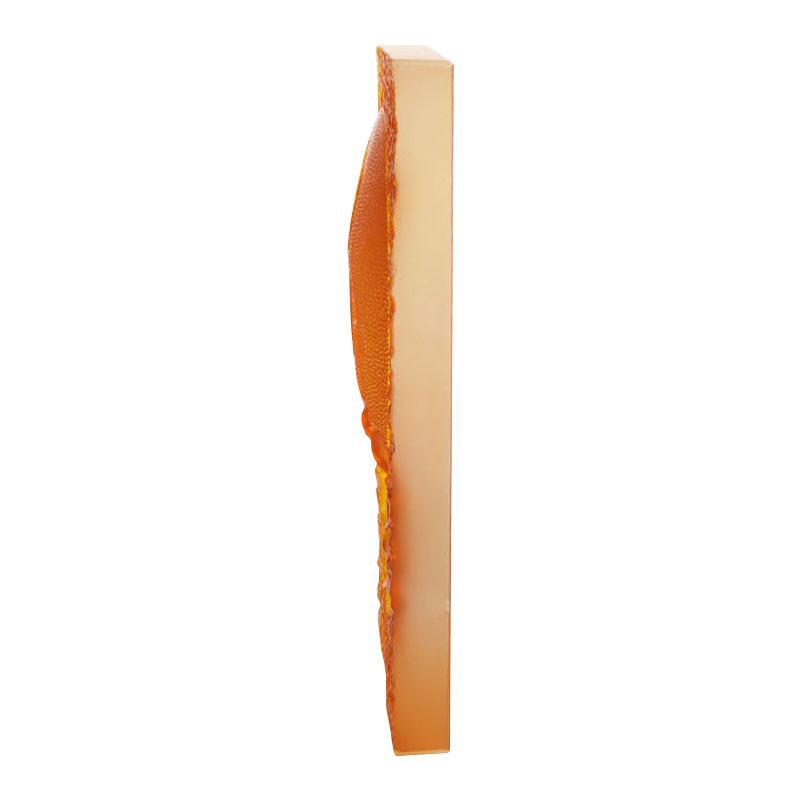 Golden Crystal Glass Medicine Buddha BrickA golden crystal glass brick carved with a seated Medicine Buddha on a lotus, intended for temple or shrine display and architectural-scale religious decoration.View Product →
Sculptural pieces are judged differently from jewellery: silhouette and the way light passes through the body matter more than micro-detail on a face. A short guide to art glass sculpture is worth reading before choosing a companion piece, because cast, carved and kiln-formed work sit in different price and repair categories.
Care That Protects the Gold Tone
- Perfume, sunscreen and hair products first, pendant last. Alcohol and acids dull both gold alloys and fired glaze.
- Remove it before swimming. Chlorine attacks plating and silver, and salt water does the same more slowly.
- Store flat or hanging rather than tangled with other chains; bails are the first part to deform.
- Clean gold with warm water and a drop of mild soap, then dry with a soft cloth. Skip ultrasonic cleaners on glass with applied colour.
- Check the bail every few months. Replacing a worn jump ring costs far less than replacing a pendant.
A Buying Sequence That Avoids Returns
- Decide the metal and set the budget against it, not against size.
- Choose the figure for the occasion, then confirm the gesture is legible at your chosen height.
- Measure a chain you already wear and match the bail opening to it.
- Ask for fineness, plating thickness and weight before ordering.
- Plan the care routine before the first wear, not after the first scratch.
Get the metal and the bail right and the pendant will still look deliberate years from now. Get them wrong and no amount of detail on the face will fix it.
 previous post