

 中文繁体
 English
 Français

Buddha Bell Guide: Types, Materials, Sound, and Practical Altar Placement
A temple committee specifies one buddha bell for a 30 m² shrine room. The catalog arrives, and the options run from a palm-sized standing bowl to a cast bronze temple bell that needs a structural frame. The purchase goes smoothly only when the room, ritual, mounting, and sound are defined before finish and price are compared. The practical conclusion is simple: match the bell type to the space and the way it will be struck, then choose material and decoration. A buddha bell is an umbrella term, not a single product.
What a Buddha Bell Usually Means
The phrase is used for at least four objects with different proportions and acoustic behavior. A standing bell, also called a resting bell or singing bowl, sits rim-up on a cushion or low stand. A temple bell is suspended in a frame or tower and struck to mark time or ceremony. A handbell, including the ritual ghanta, is held during chant. A small altar bell sits on or near the shrine table. Confusing these forms is the most common specification error.
| Form | Usual material | Mounting | Typical use | Buying check |
|---|---|---|---|---|
| Standing bell | Bronze, brass, or decorative crystal | Cushion or low stand, rim up | Meditation, chant, sound practice | Rim flatness, wall thickness, mallet pair |
| Temple bell | Cast bronze | Heavy frame or tower | Temple signal, ceremony | Load capacity, swing clearance, corrosion protection |
| Handbell or ghanta | Bronze or brass | Hand-held, often with a vajra | Ritual, chant | Handle fit, balance, seam sound |
| Altar bell | Brass or bronze | Small stand or hand | Offering, chanting cues | Scale relative to altar, tone decay |
The first decision is functional. If the bell must be heard across a courtyard, a standing bowl will not do the work of a suspended temple bell. If it must be carried during a long chant, a heavy cast bell becomes a handling problem. If it is mainly a visual object on a shrine table, acoustic performance still matters because a dull or rattling bell undermines the setting.
Standing Bells and Singing Bowls: The Buyer's Checklist
Begin with the rim and the wall, not the shine. A standing bell with an uneven rim will rock, and a bell with a sharp lip is uncomfortable to handle. Place the bell on a flat glass surface and press gently; movement means the rim is not true. Run a finger around the inner and outer lip. A clean, even edge is easier to strike and safer to clean.
- Diameter: 6–12 cm suits personal use; 15–25 cm suits a small shrine room; 30 cm and above is a hall instrument and needs a stable cushion or stand.
- Wall thickness: a thin wall speaks quickly and decays fast; a thick wall responds more slowly and sustains longer. Compare two bowls of the same diameter rather than relying on weight alone.
- Mallet pair: a hard mallet emphasizes attack; a soft mallet emphasizes the fundamental. Ask for both and test at low volume.
- Decay: a bowl that sustains for 15 seconds in a carpeted showroom may sound short in a tiled hall. Test in a room with similar surfaces if possible.
- Finish: patina is stable and expected; flaking lacquer, active green corrosion, and cracks near the rim are reasons to reject.
Volume is part of fit. A bowl that sounds full at conversation level in a quiet room may disappear under forty people chanting. Ask for a recording made at a fixed distance, then compare it with the room's expected noise floor. This is more useful than a studio recording with reverb added.
Temple Bells and Handbells: Installation and Ritual Fit
A hanging temple bell is a structural installation, not a decorative accessory. A 100 kg bell can impose several times that load during swinging, so the frame, ceiling anchor, and fixing method need an engineer's review. Allow clearance on the swing axis equal to at least the bell diameter plus 300 mm as a planning rule, and keep the bell away from walkways, doors, and roof drainage. Outdoors, use a sheltered position, stainless fixings, and drainage below the frame. Coastal air accelerates corrosion, so inspect the crown and clapper attachment twice a year.
For a handbell, grip matters more than ornament. A handle diameter of roughly 25–35 mm suits many adult hands, and a mass under 1 kg is easier to control during long chant. Check that the handle is tight, the seam does not cut into the palm, and the striker produces a clean attack without a double beat. In ritual use, confirm the bell's orientation, the hand that holds it, and the point in the chant where it is sounded; these details vary by tradition and should be settled with the person leading the ceremony.
Materials, Finishing, and What the Sound Tells You
Bronze is copper with tin; brass is copper with zinc. Bronze usually gives a more complex sustain, while brass tends to be brighter and more direct. Cast bells can carry a visible seam; spun bowls are often more uniform. Neither method is automatically better, but a seam that is loose, a rim that has been ground thin, or a patch of filler near the crown should prompt a closer inspection. Tap the bell lightly with a soft mallet and listen for rattles, a dead spot, or a double beat. A crack near the rim is a rejection, not a repair opportunity.
Do not lacquer the sounding surface unless the maker confirms it is intended. Lacquer can mute high frequencies and later flake into the room. Clean with a dry cloth and a soft brush; avoid acidic polish on a patina you want to keep. In sacred interiors, glass is not a sensible material for a struck bell, but it often appears beside one. This guide to crystal decoration in sacred interiors explains how translucent surfaces can support the visual setting without competing with the bell's acoustic role.
Sizing a Bell for a Shrine Room or Home Altar
Room volume, ceiling height, and the number of listeners set the useful size range. For a room under 30 m², a 15–20 cm standing bell is usually sufficient. A 30–60 m² room can carry a 20–30 cm bell, while larger halls need a pair, a suspended bell, or discreet amplification. If the ceiling is below 2.7 m, avoid a large swinging bell; use a standing bell or handbell instead. On an altar table 75–90 cm high, place a standing bell slightly forward of the rear edge so the mallet has clearance and the bell cannot be knocked into a candle or vase.
Allow a 15–20 cm clear zone around the bell. A cushion should sit flat, not compress on one side. If the bell is used daily, choose a stand or tray that can be lifted without tipping. For occasional use, a padded box is enough, but the box must not press on the rim. These small details decide whether the bell remains usable after the first month.
Matching the Bell to the Altar Ensemble
Once the acoustic object is chosen, visual balance matters. Bronze is dark and visually heavy; glass is translucent and reflective. Use one dominant hue across the altar and repeat it in the bell cushion, offering vessels, and decorative panels. A warm amber bell beside clear glass can look washed out under cool lighting, while a deep blue glass set can make a brass bell appear yellow. Test samples under the actual lamp color temperature before committing to a full set.
An offering set is the easiest way to repeat scale and color. A coordinated set of lotus or eight-treasure vessels can sit below the bell without crowding it, provided the tallest vessel stays below the bell's rim line.
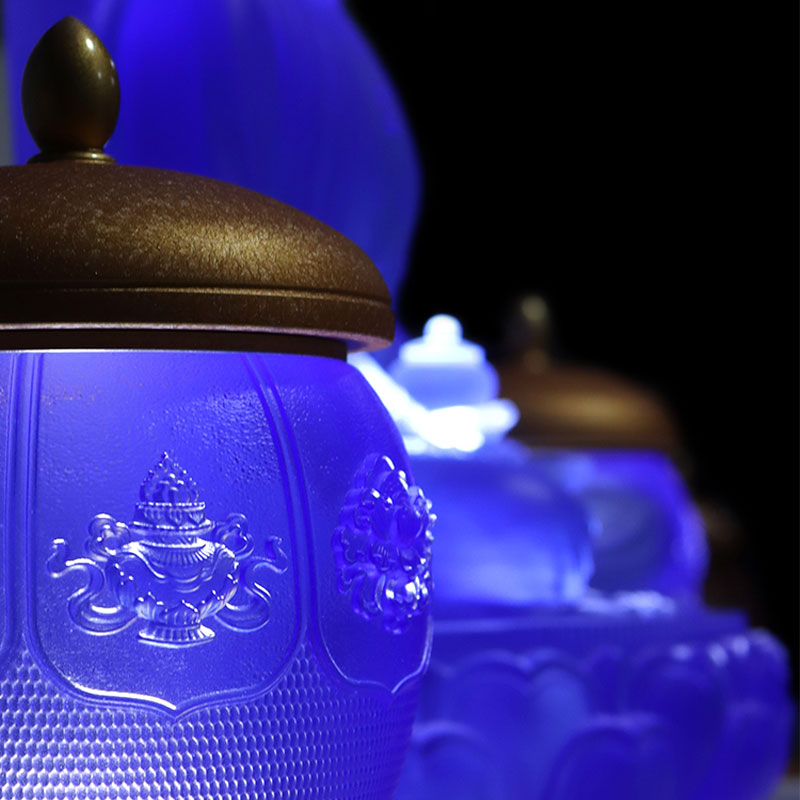 Eight Treasures Lotus Buddhist Altar Glass Offerings SetRoyal-blue carved glass altar set with gold accents, offered as a coordinated display that can sit below a bell without crowding the shrine.View Product →
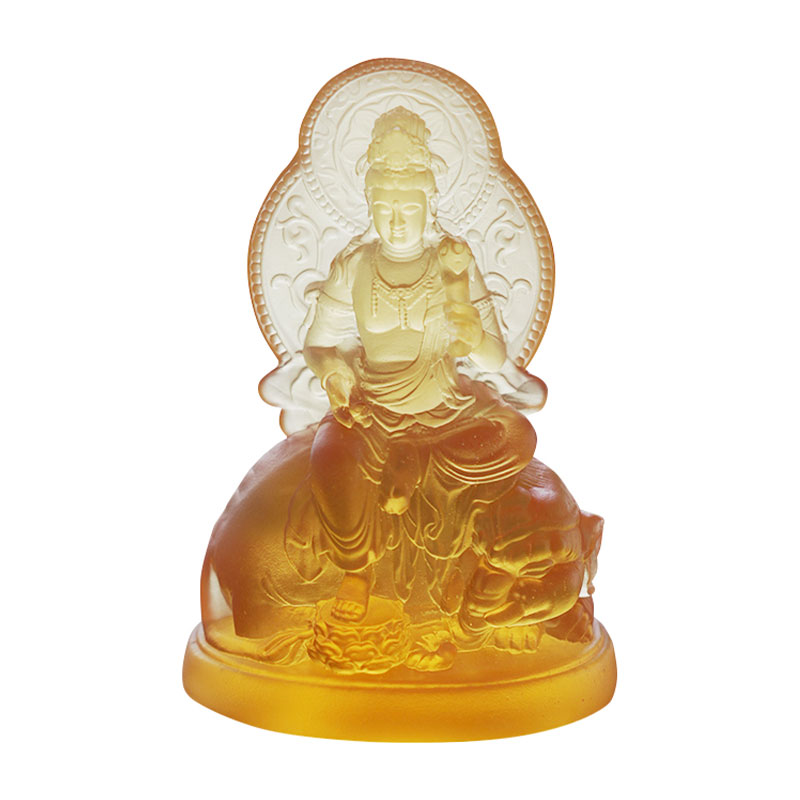
A Buddha figure behind the bell should be proportioned to the room, not to the table alone. As a working rule, the statue's height should be at least twice the bell's diameter if both share the same sightline; otherwise the bell reads as a separate object rather than part of the shrine.
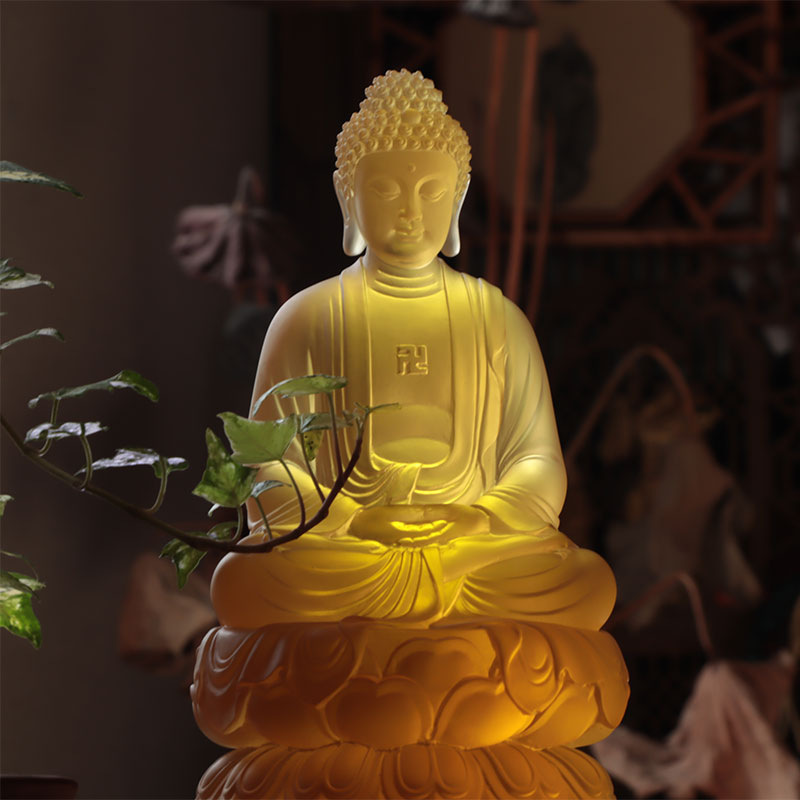 Amitābha Buddha Crystal Statue for Buddhist Altar DisplayCrystal Amitābha Buddha statue with Buddhist symbolism, suited as a focused shrine figure behind a bell and available for custom commissions.View Product →
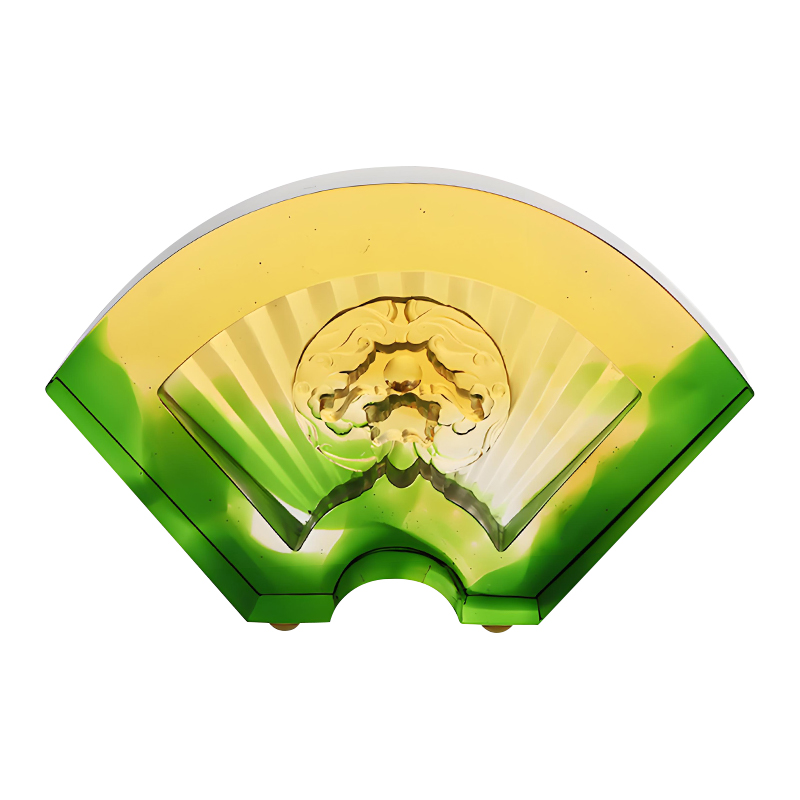
Decorative glass bricks and panels belong on the wall or rear screen, where they can catch light without entering the bell's strike zone. Keep at least 40 cm between a wall panel and the bell's swing or mallet path. A translucent brick with a figure or lotus motif can tie the altar to the room's architecture while leaving the acoustic object simple.
 Amitabha Buddha Liuli Decorative Brick for Temple WallsCrystal-glazed decorative brick depicting Amitabha on a lotus seat, suited to wall or rear-screen placement where it can catch light.View Product →
For projects that combine a bell with a full glass ensemble, specify the bell first and the glass second. Reversing the order often leads to a bell that is too large for the available table depth or too bright for the glass palette.
Care, Handling, and Common Buying Mistakes
- Buying from a photograph without a sound recording or return option.
- Ignoring the mounting: a heavy bell needs a frame rated for dynamic load, not a shelf bracket.
- Using the wrong mallet and concluding the bell is dull.
- Over-polishing a patina until the surface becomes uneven.
- Treating a decorative crystal bell as a sounding instrument; crystal can ring, but its fracture risk and tone are different from bronze.
- Skipping an in-room test with the actual cushion, table, and lamp placement.
Store a standing bell on its cushion, not on a hard shelf. Support a handbell by the handle, not the rim. For a suspended bell, check the clapper, crown, and fixings after storm weather or seasonal temperature swings. Record the bell's mass and dimensions in the maintenance file so replacement parts can be ordered without guesswork.
A Practical Specification Approach
- Define the use: daily chant, ceremony, meditation, or visual furnishing. State who will strike the bell and how often.
- Measure the room, ceiling height, table depth, and available swing or mallet clearance. Photograph the intended position with a tape measure in frame.
- Set a size and mass range. For a standing bell, ask for diameter and wall thickness within a stated tolerance, such as ±5%, and confirm the rim is true.
- Request a recording made at one meter in a comparable room, plus a return or exchange condition if the tone does not suit.
- Confirm the mounting, mallet, cushion, and delivery protection. For a suspended bell, obtain a structural review before installation.
- Plan care: cleaning cloth, storage position, and a yearly inspection of fixings, rim, and finish.
The useful sequence is type, room, mounting, tone, then decoration. A buddha bell that fits the ritual and the space will be used; one chosen only for appearance often becomes a shelf object. If the project also includes altar furnishings, browse Buddhist temple glass supplies after the bell specification is settled, so the glass supports the acoustic centerpiece rather than competing with it.
 previous post