 中文繁体
 English
 Français

Buddha Beads Necklace Meaning: 108 Beads, Guru Bead, and How to Wear a Mala
A Buddha bead necklace means three things at once: a number, a structure, and a habit. The number is usually 108. The structure is the guru bead that closes the loop. The habit is the recitation the strand was built to count. Color, pendants, and metal caps are layers added on top of those three, not the source of the meaning.
That distinction decides how you buy one. A strand whose beads slide freely on bare cord, with no larger bead at the center, can be worn with good conscience, but it cannot be counted comfortably. A strand with knots between the beads and a clearly marked center can be used for a lifetime.
Names You Will Meet: Mala, Japa, and Buddha Beads
Mala is Sanskrit for garland, and it is the most common term for the strand. A japa mala refers specifically to recitation beads, since japa means the repeated murmuring or mental repetition of a mantra or the name of a Buddha. In Japanese traditions the same object becomes a juzu. English tends to flatten all of this into "Buddha beads" or "prayer beads."
The terminology matters because one phrase covers two different products: a full 108-bead strand worn around the neck, and a short wrist strand of 18 to 27 beads. Both are legitimate. They are used differently, sized differently, and priced differently.
The Meaning Behind 108 Beads
There is no single official explanation of the number 108, and honest teachers say so. The best-known readings are these:
- 108 kleshas, or mental afflictions, that the practice works through: attachment, aversion, and confusion in their many permutations.
- 108 feelings, calculated as 36 states across past, present, and future, multiplied by three tones: pleasant, unpleasant, and neutral.
- 108 names of a deity, recited as a devotional litany; in Tibetan texts, 108 volumes of the Kangyur.
- A practical margin. In Hindu sandhya practice the count is 100 mantras, and the extra eight beads absorb mistakes in counting.
- A neat piece of arithmetic that people enjoy quoting: one to the first power, times two to the second, times three to the third, equals 108.
Shorter counts carry their own logic. Fifty-four beads are half of 108, twenty-seven are a quarter, and twenty-one, eighteen, fourteen, twelve, and nine appear in various schools and in wrist malas. Anyone who insists a strand must have exactly 108 beads is describing one convention, not the whole tradition.
The Guru Bead, the Spacers, and Why You Do Not Cross the Center
At the base of a full mala sits the guru bead, sometimes called the meru bead. It is larger or differently shaped than the rest, and the tassel hangs from it. It stands for the teacher who passed the practice on, or for the Buddha himself, depending on who you ask.
Counting proceeds bead by bead from the guru bead, and when you arrive back at it, the common instruction is not to cross over. You either stop, or reverse direction and count back the way you came. The reasoning is simple courtesy: you would not step over your teacher's head.
Tibetan-style malas often add three small marker beads, spaced at the twenty-seventh positions, so you can find your place when attention drifts. Count them together with the guru bead and a strand can hold 111 pieces rather than 108. That is structure, not error.
What the Beads Are Made Of
Materials carry loose associations rather than rules. Use the following as a rough map, and treat the right-hand column as the part that affects daily use.
| Material | Usual association | Practical note |
|---|---|---|
| Bodhi seed | Enlightenment, from the tree under which the Buddha awakened | Light and warm in tone, ages visibly, can crack if soaked |
| Lotus seed | Purity, a flower rising clean out of mud | Very light with a natural pattern; brittle when dry |
| Rudraksha | Protection and steadiness, also widely used in Hindu practice | Durable and grippy; textures range from smooth to deeply ridged |
| Sandalwood | Calm and devotion; the fragrance is part of the practice | Scent fades with time; keep away from strong sunlight |
| Bone | Impermanence, a reminder of mortality | Common in Tibetan strands; check sourcing carefully |
| Crystal and colored glass | Clarity and light; glass appears among the seven treasures in Buddhist texts | Heavier than wood; excellent for short strands and pendants |
| Turquoise, coral, lapis | Protection and healing in Himalayan traditions | Softer stones chip; coral sourcing raises ethical questions |
| Silver and gold | Precious offering, used for caps, counters, and spacers | Adds weight; silver tarnishes and needs occasional polishing |
Glass deserves a closer look, because buyers often assume it is a modern substitute for real materials. In Buddhist literature the list of seven treasures is not fixed, and the term usually rendered as lapis lazuli or crystal is in some translations given as colored glass. A well-made glass bead, with depth in the body and clean edges at the drill hole, has as much textual footing as any seed. The craft behind it is old and demanding, and reading about colored glass decoration as an art form explains why the material behaves the way it does in the hand.
Color Meanings, and How Seriously to Take Them
Color symbolism in malas is real but local. It shifts by lineage, region, and century, so any chart claiming to be definitive is overselling.
- White: purity, calm, and clarity; frequently used in practices focused on Avalokiteshvara.
- Red: energy, warmth, and protection; also tied to Amitabha and to certain tantric practices.
- Green: compassionate action, most often linked to Tara.
- Blue: healing and steadiness, the color of the Medicine Buddha.
- Yellow and gold: grounding, abundance, and the earth element.
- Black: protection and the absorption of negativity, common in obsidian and onyx strands.
If a color was chosen for a specific practice, keep it. If it was chosen because it suits your coat, keep that too. The strand you actually pick up is the one that gets used.
Wearing It: Neck, Wrist, and What Monks Wear
A full 108-bead strand is normally worn around the neck, either as a single loop or wrapped two or three times. On a shorter frame it hangs low; on a broader one it may sit at the sternum. That is expected, and it is why the guru bead and tassel usually end up at the center front or at the back of the neck, according to personal habit.
 Silver Color Glass Pendant Necklace with Patterned MountingA silver-color necklace with a patterned mount and colored crystal glass pendant; its dreamlike gradient makes it a neck-worn decorative piece worth viewing.View Product →
Wrist malas solve the practical problem. A strand of 18 to 27 beads stays out of the way while you work, fits under a sleeve, and is short enough to count with one hand. Most adults are comfortable with 8 mm beads on a strand sized to a wrist of roughly 16 to 18 cm. Measure first if you have never worn one, because beads do not stretch.
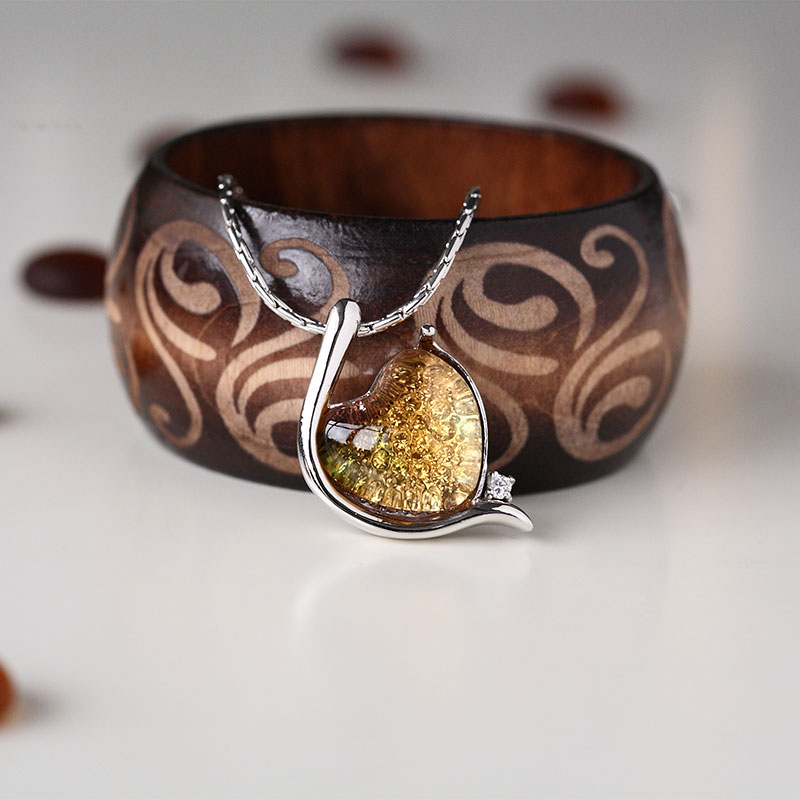 Silver Color Bracelet with Inlaid Glass PendantA delicate silver-color chain bracelet with an inlaid glass pendant, whose nebula-like color makes it a wrist-worn decorative option worth a look.View Product →
What about the very large strands seen on some monastics? In several East Asian traditions, senior figures in a large assembly wear more prominent beads, partly so they can be identified at a distance during ceremonies. Accounts vary by school and monastery, and none of it changes what a layperson should wear. A modest wrist strand is not a lesser object.
Whether you wear a strand or keep one on a shelf, most practitioners give it a fixed place: a low table, a cushion, and a modest figure to face while sitting. Keeping the strand with those objects, rather than loose in a pocket, is the everyday version of treating it as a tool.
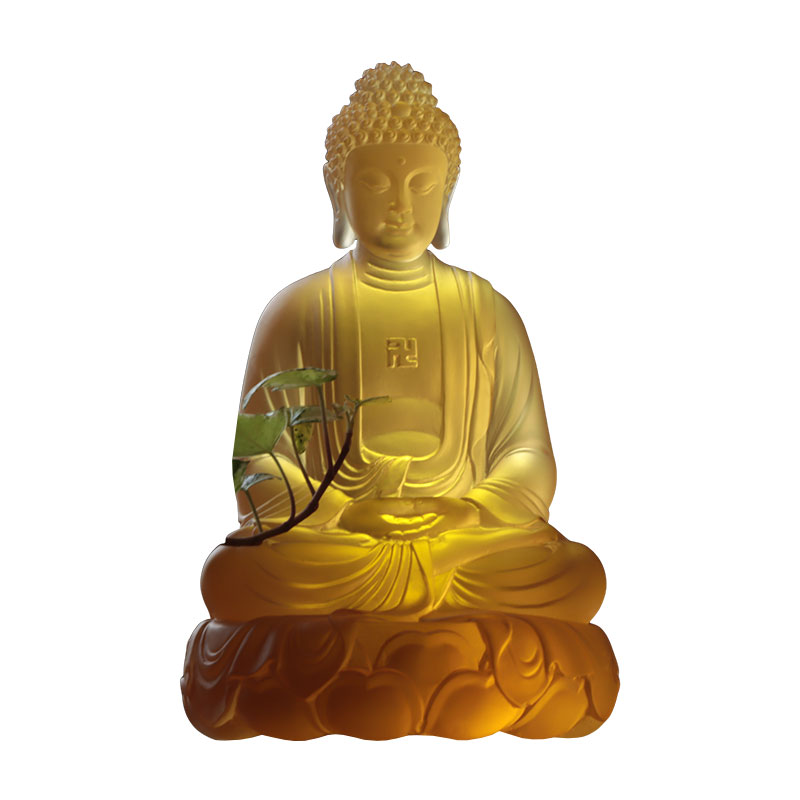
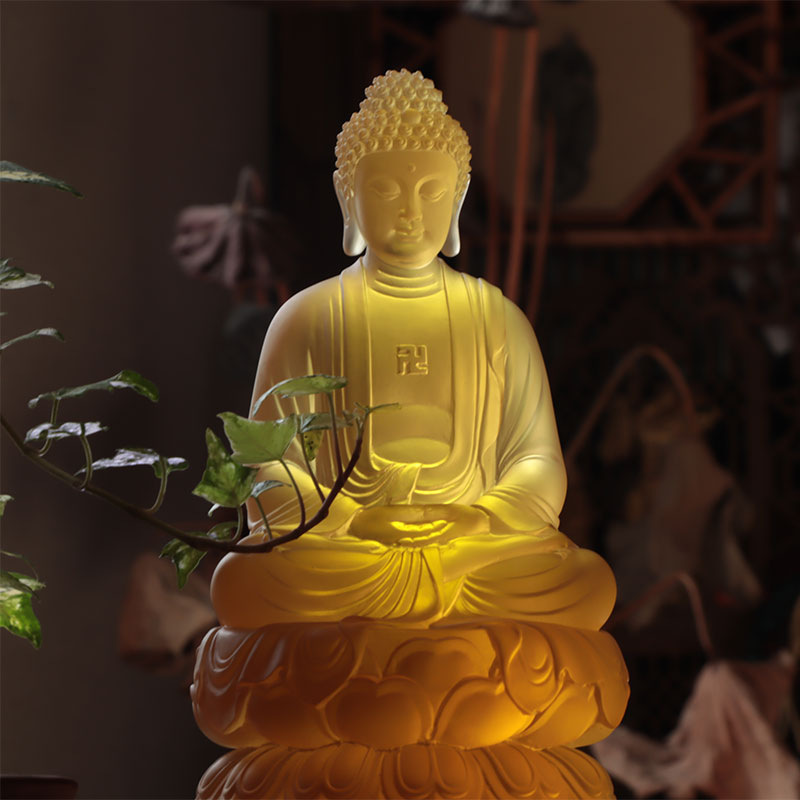 Amitābha Buddha Crystal Statue for Religious DisplayA glass Amitābha Buddha statue made by lost-wax casting, suitable for temple, religious, or decorative display as a focal figure.View Product →
What a Buddha Bead Necklace Does Not Mean
- It is not an amulet that produces luck on its own. The strand counts repetitions, the repetitions are the practice, and the practice is what changes anything.
- It does not require ordination, initiation, or permission. Laypeople have used malas for centuries.
- It is not reserved for monks. Monastic strands are often larger and more formal, but the object itself is common property.
- A snapped cord is not a bad omen. Cords wear out, especially on a strand used daily, and restringing is routine maintenance.
- Worn purely as jewelry, it is jewelry. That is a legitimate choice, as long as nobody expects spiritual results from the fabric of the cord.
One related point about charm pendants. A Buddha figure worn at the throat is generally read as a reminder of inner peace, mindfulness, and the path toward wisdom rather than as a claim of protection. The reading is set by the wearer's intention more than by the pendant.
Sizing, Cord, and Care
A few numbers save a lot of returns. A 108-bead strand strung at 8 mm gives roughly 86 cm of beads before the guru bead and tassel, 6 mm beads land around 65 cm, and 10 mm beads push past 100 cm and start to feel like a statement. Knots tied between beads add length, and they prevent the loss of the whole strand when one cord section fails.
Material weight matters more than most buyers expect. Glass runs around 2.4 to 2.5 grams per cubic centimetre, against roughly 0.5 to 0.9 for most woods and seeds. A full 108-bead glass strand can therefore weigh several hundred grams, which is a fine object to look at and a poor one to hold for an hour of recitation. This is why glass works best in short wrist strands, pendants, and single statement beads.
For care, keep it simple. Wipe with a soft dry cloth, use mild soap and water only when needed, dry immediately, and avoid sudden temperature changes, which is the main way glass chips or crazes. Store the strand separately so harder beads do not grind against softer ones. If you practice daily, plan on restringing every year or two; the cord fails long before the beads do.
If you remember one thing, make it this: the meaning of a Buddha bead necklace is carried by the count, the center bead, and the repetition, not by the finish. Choose a material you will not mind holding, a length you will actually wear, and a strand whose guru bead is easy to find by touch. Everything else is preference, and preference is allowed.
 previous post