 中文繁体
 English
 Français

Black Buddha Pendant Guide: Materials, Carving, Fit, and Care for Buyers
A black Buddha pendant usually arrives in a small pouch, and the first test is not the face but the surface. Glossy black throws a hard highlight, matte black swallows the carving, and a mid-sheen finish keeps both the silhouette and the details readable. That single observation explains why two pendants with the same image can feel completely different on a neck: the finish controls how much of the Buddha form the eye can actually see.
For a wearer, the practical answer is to choose the finish before the symbolism. For a buyer stocking a range, the safer answer is to compare material, carving depth, bail construction, and cord or chain weight together. A black Buddha pendant is a small object, but it sits at the meeting point of jewelry, personal meaning, and daily wear, so the purchase decision is rarely only about color.
What Black Adds to a Buddha Pendant
Black makes a pendant visually quiet. It reads as unisex, works with both linen and dark tailoring, and avoids the bright contrast that can make a Buddha image feel more decorative than contemplative. In a display case, black also creates depth: a polished black surface reflects the surrounding light, while a frosted black surface absorbs it and pushes the carved face forward.
The trade-off is detail loss. Black surfaces reduce the contrast between high and low areas, so a shallow carving can disappear at arm's length. A well-made black Buddha pendant therefore depends on deeper relief, crisp edges, and a finish that catches light at an angle rather than flattening the whole image. If the face, robe folds, hands, and base cannot be identified under a desk lamp or a shop spotlight, the pendant will not improve in daylight.
Black is also a mood rather than a single color. It can suggest protection, grounding, or introspection, but those associations are cultural and personal, not measurable product features. For retail copy and product descriptions, it is safer to describe the visual effect and the material honestly, then let the buyer attach meaning.
Material Choices Behind a Black Buddha Pendant
Black pendants are commonly offered in obsidian, black onyx, black glass, or colored crystal glass. Each material has a different weight, surface behavior, and risk profile. Obsidian is natural volcanic glass and can produce a deep, glassy black, but edges and carved points may chip if the pendant is knocked against a hard surface. Black onyx is dense and takes a fine polish, and in many commercial supplies it is treated or dyed to achieve an even black color. Black glass and colored crystal glass allow controlled color, repeatable carving, and a wider range of frosted, glossy, or gradient finishes.
| Material | Typical Look | Wear and Weight | Care Notes |
|---|---|---|---|
| Obsidian | High gloss, natural glassy depth, sharp reflections | Moderate weight; edges and fine carving can chip | Wipe with a soft cloth; inspect carved edges before packing |
| Black onyx | Dense, even black; takes a smooth polish | Heavier in a similar size; feels solid against the chest | Avoid prolonged soaking; dry immediately after cleaning |
| Black glass or colored crystal glass | Controlled color; glossy, frosted, or layered effects | Light to moderate; carving depth can be repeated in production | Use mild soap and a soft cloth; avoid abrasive pads |
Material claims deserve scrutiny. If a pendant is sold as obsidian, ask how the supplier verifies the material and whether the piece is natural, treated, or a glass alternative. If it is sold as black onyx, ask whether color enhancement is disclosed. For glass, the key questions are whether the color is in the glass body or applied to the surface, and whether the finish will wear at the bail or along high-contact edges.
Carving, Silhouette, and the Detail Test
The most useful test for a black Buddha pendant is to hold it at a 30- to 45-degree angle under a light. A good carving will show a clear forehead line, a readable nose and chin, defined robe folds, and a stable base. The silhouette should also work when the pendant is viewed from a few feet away. If the outline is a dark blob and the internal details only appear at close range, the pendant will look plain on a neck.
Size matters as much as carving. A pendant in the 20–30 mm range tends to sit comfortably as an everyday piece, while 35–45 mm pieces read more strongly as a statement or ceremonial object. Thickness is the hidden variable: a thick pendant may feel heavy after an hour, and a thin pendant may feel fragile at the bail. Check that the bail hole is centered, smooth inside, and large enough for the intended cord or chain. A sharp or roughly finished bail will wear through a soft cord faster than the pendant itself wears out.
Also look at the back. A flat, polished back sits better against the chest than a rough or hollowed one. If the back is hollowed to reduce weight, the rim should be even and the opening should not create a thin edge that can chip.
Fit, Cord, and Daily Wear
A black pendant is often worn close to the skin, so comfort is not a minor detail. A pendant that weighs around 10–20 g will feel different from one above 30 g, especially on a thin cord. Wider cords distribute weight better; thin chains concentrate it at the bail. For unisex designs, an adjustable cord with a sliding knot is practical because it lets the wearer change the drop without changing the pendant.
Metal contact is the other daily-wear issue. Stainless steel bails and clasps are common in lower-priced ranges, while silver or gold-toned fittings may suit gift packaging. If the wearer has sensitive skin, the metal parts should be described clearly and kept away from unknown plating. Black glass and crystal glass are generally inert, but the cord, tassel, and metal findings are the parts that touch the skin most often and need the most honest specification.
Buying Checklist for Retailers and Gift Buyers
For a shop, a market stall, or a gift buyer, the difference between a pendant that sells and one that sits in the tray is often consistency. A single sample can look excellent under a buyer's lamp, but the repeat order needs the same finish, the same bail position, and the same carving depth. Use a short checklist before confirming a range:
- Compare three to five pieces side by side under the same light; check face detail, robe folds, and base symmetry.
- Run a fingertip around the bail and edges; reject sharp rims, rough holes, and uneven thickness.
- Confirm the material claim in writing, including whether onyx is treated or glass is surface-colored.
- Test the cord or chain with the pendant attached; the drop should hang straight and the bail should not twist.
- Ask for packaging that protects the surface, especially for glossy black pieces that show fingerprints and scuffs.
Surface finish is also a sourcing decision. A mid-sheen or satin finish hides fingerprints better than a mirror polish and keeps carving detail visible in shop lighting. For a broader look at how light and surface treatment shape glass decorative pieces, this guide to crystal decoration and light is a useful reference when comparing finishes across a collection.
Care and Cleaning
Black surfaces show dust, skin oils, and water spots more readily than mid-tone stones. The safest routine is simple: wipe the pendant with a soft dry cloth after wear, clean occasionally with mild soap and lukewarm water, and dry immediately with a non-abrasive cloth. Avoid ultrasonic cleaners for treated onyx or any pendant with glued components, and avoid abrasive pads, toothpaste, and harsh household cleaners.
- Store the pendant separately from harder jewelry to reduce surface scratches.
- Check the cord and bail regularly; replace a frayed cord before it fails.
- Keep perfume, sunscreen, and hairspray away from the surface where possible.
- For frosted or carved glass, use a soft brush to lift dust from recessed areas rather than a sharp tool.
Why Glass Pendants Deserve a Place in the Range
Glass is a practical material for black and near-black Buddha pendants because color density, sheen, and carving depth can be controlled across a production run. A glass pendant can be polished to a high gloss, etched to a soft matte, or finished with a layered depth that resembles natural stone without the same edge-chip risk. For buyers who need repeatable detail and a consistent presentation, that control matters.
JM-ARTFAMILY works in colored crystal glass and produces jewelry and decorative pieces from its base in Kunshan, China. The company's range includes glass pendants and necklace mountings, and the same bail-and-mounting logic can be seen in this glass art and jewelry collection.
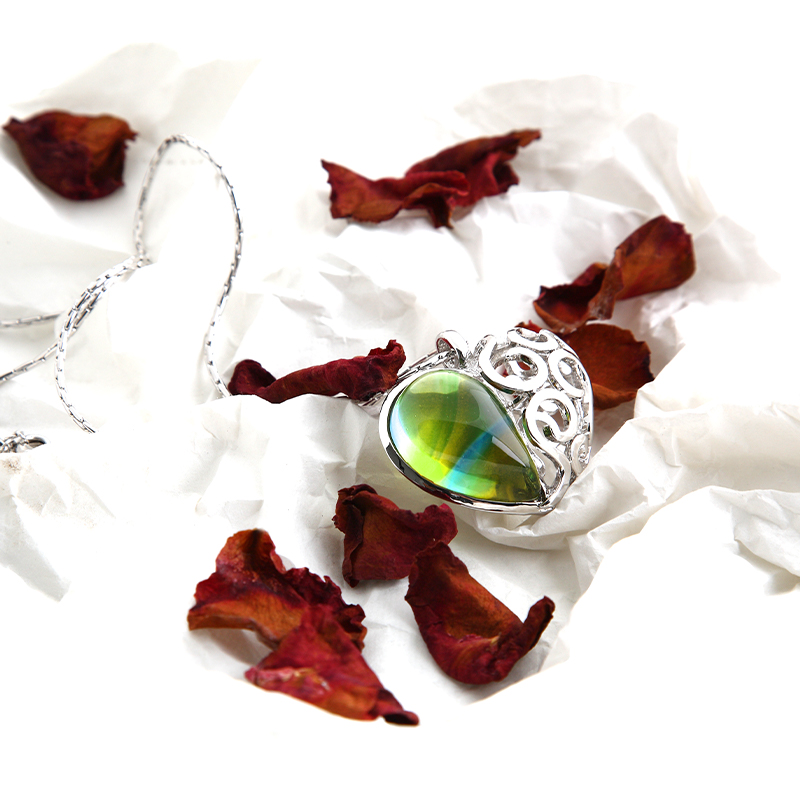 Silver-Tone Necklace with Patterned Glass Pendant MountingThis glass pendant necklace pairs a gradient-colored glass body with a silver-colored chain and patterned mounting, suited to personal wearing or romantic gifting.View Product →
That silver-color necklace with a glass pendant pattern mounting is not a black Buddha piece, but it is useful for understanding construction: the glass body, the metal bail, and the cord or chain need to work as one unit. A black pendant range should be evaluated the same way, not as a loose stone with an accessory added later.
A black Buddha pendant is a small purchase with several visible decisions: material, finish, carving depth, bail quality, and daily comfort. The safest choice is not the darkest surface or the most detailed carving in isolation, but the pendant that remains readable in ordinary light and comfortable after an hour of wear. For wearers, that means checking the face and edges before the symbolism. For buyers, it means confirming material claims, comparing repeat samples, and treating the cord and bail as part of the product rather than an afterthought.
 previous post