 中文繁体
中文繁体
 English
 Français

What is the manufacturing process of Colored Crystal Glass Jewelry?
Introduction to Colored Crystal Glass Jewelry
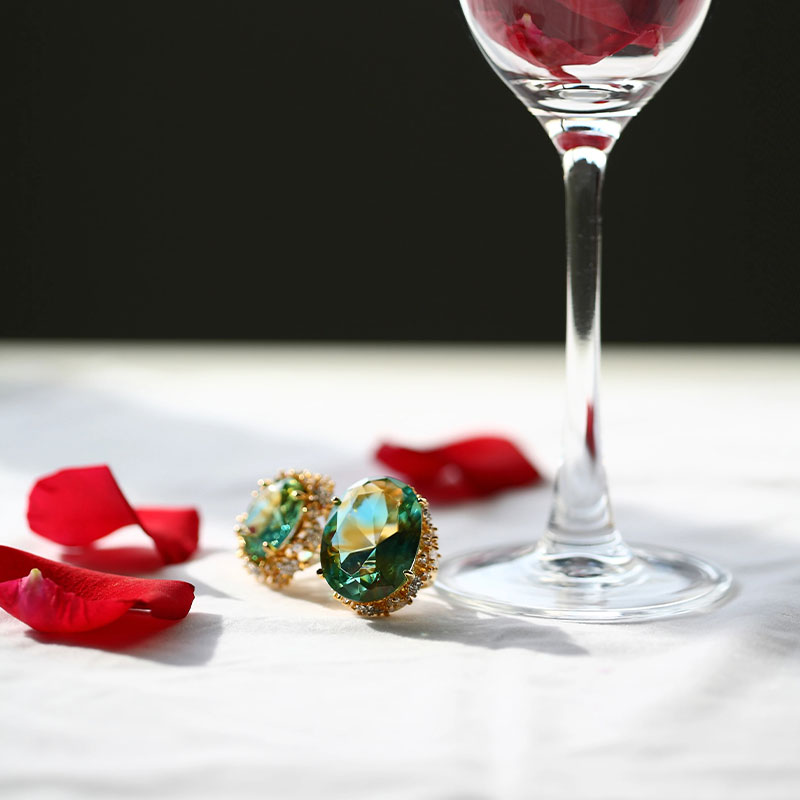
Colored Crystal Glass Jewelry is a popular type of decorative accessory that combines the brilliance of glass with vivid colors, creating a visually appealing and elegant product. The manufacturing process of these pieces involves precise control over materials, heat, color application, and polishing techniques to ensure clarity, durability, and uniformity. This article delves into the full process, highlighting each stage and the craftsmanship involved in producing high-quality crystal glass jewelry.
Raw Material Selection
The first step in producing colored crystal glass jewelry is selecting high-quality raw materials. The main ingredient is silica sand, which is combined with other components such as soda, lime, and specific metal oxides to produce colored effects. The purity of these materials is critical to achieving clarity and brilliance in the final product.
- **Silica Sand:** Provides the base structure for glass formation, ensuring hardness and clarity.
- **Soda and Lime:** Used to lower the melting point and enhance the workability of the glass.
- **Metal Oxides and Pigments:** Added to create a wide range of colors and visual effects, such as cobalt for blue, chromium for green, or gold for red hues.
- **Lead Oxide (optional):** Sometimes included to increase the refractive index, giving crystal its characteristic sparkle.
Melting and Glass Formation
Once raw materials are measured and blended, the mixture is heated in a furnace at extremely high temperatures, typically around 1400–1600°C. This stage transforms the raw materials into molten glass, which is the basis for shaping jewelry components.
- **Furnace Control:** Precise temperature management is essential to prevent impurities or air bubbles in the molten glass.
- **Homogenization:** Continuous stirring ensures uniform color distribution and consistent chemical composition.
- **Viscosity Adjustment:** Controlling the viscosity allows artisans to shape the glass accurately during molding or pressing.
Molding and Shaping
The molten glass is then formed into desired shapes for jewelry pieces. Various techniques can be employed depending on the design and complexity of the item.
- **Pressing:** Molten glass is pressed into pre-designed molds to create uniform shapes such as beads, pendants, or charms.
- **Blowing:** Artisans can create hollow or spherical forms by carefully blowing air into molten glass.
- **Cutting and Carving:** Once partially cooled, the glass may be cut or engraved to add intricate patterns or facets.
Coloring Techniques
Color application is crucial for creating vibrant, eye-catching jewelry. There are multiple methods to achieve desired colors and effects.
- **Incorporated Pigments:** Metal oxides or synthetic pigments are mixed directly into the molten glass to achieve uniform coloration.
- **Surface Coating:** Some designs apply colored layers on the surface for gradient or iridescent effects.
- **Foiling:** Thin metallic foils can be embedded within the glass to create shimmer or reflective effects.
Annealing and Cooling
After shaping and coloring, glass jewelry must be carefully cooled in a controlled process known as annealing. This step reduces internal stress and prevents cracking or breaking during handling.
- **Annealing Furnace:** Jewelry pieces are slowly cooled in a furnace to relieve thermal stress.
- **Gradual Temperature Reduction:** Rapid cooling is avoided to maintain structural integrity.
- **Quality Check:** Any warped, cracked, or flawed pieces are removed before polishing.
Polishing and Finishing
Polishing enhances the brilliance and clarity of colored crystal glass jewelry, bringing out its sparkle and visual appeal. Multiple methods are employed to achieve a smooth, reflective surface.
- **Mechanical Polishing:** Jewelry is tumbled with fine abrasives to remove surface imperfections.
- **Hand Polishing:** Skilled artisans may polish high-end pieces manually for superior clarity and shine.
- **Edge Finishing:** Sharp edges or mold lines are smoothed to ensure safety and comfort in wear.
Quality Control and Grading
Before packaging, each piece undergoes rigorous inspection to ensure consistency in color, clarity, size, and shape. High-quality colored crystal glass jewelry must be free from bubbles, cracks, or irregular coloring.
- **Visual Inspection:** Trained staff check for surface defects and uniformity.
- **Dimensional Accuracy:** Pieces are measured to meet design specifications.
- **Polish and Clarity Assessment:** Ensures maximum brilliance and aesthetic appeal.
Packaging and Presentation
Finally, finished jewelry pieces are carefully packaged to protect them during shipping and handling. Premium packaging enhances the perceived value and makes the products suitable for retail or gifting.
- **Individual Wrapping:** Soft pouches or protective foam prevent scratches.
- **Boxes and Displays:** Attractive packaging is used for retail presentation or gift-giving.
- **Labeling:** Product information, color, and batch numbers are included for traceability.
Conclusion
The manufacturing process of Colored Crystal Glass Jewelry is a meticulous combination of material selection, precise melting, shaping, coloring, annealing, and polishing. Each step contributes to the overall beauty, durability, and quality of the final product. From molten glass to polished, vividly colored jewelry, the craftsmanship involved ensures pieces that are both visually stunning and suitable for everyday wear or gifting.
By understanding this process, designers, manufacturers, and consumers can appreciate the technical skill and attention to detail required to create high-quality colored crystal glass jewelry, making it a valuable addition to any jewelry collection.
 previous post